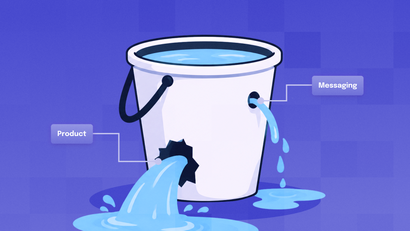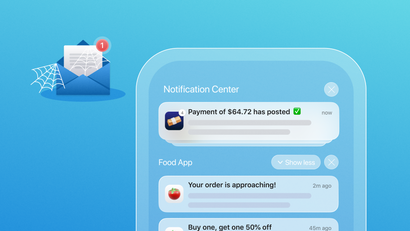
When your product is invisible until it breaks, how do you build loyalty?
At a recent Surge event in Singapore, Terry Williams, who leads MyRepublic's consumer business across sales, marketing, products, and customer service, sat down for a fireside chat about how a broadband provider in one of the world's most price-competitive markets is rethinking customer engagement from the ground up.
The conversation was packed with real examples, honest failures, and a refreshingly unconventional playbook. Here are the key takeaways.
1. If your product is invisible, create new reasons to show up
Broadband is the definition of a "set it and forget it" service. Customers sign up, and the next time they hear from their provider is usually a renewal notice, or an outage. Terry was blunt about this: most telcos leave a blank space between installation and recontract. "They're going to be like, 'Okay, you're in'... and then blank space… and then 'please give us your money again.'”
MyRepublic decided to fill that gap with customer touchpoints that actually provide value: community events, a loyalty program, in-app experiences, and even a physical retail store. The goal is to make the brand part of a customer's life, not just their monthly bill.
2. Start with a niche, then expand adjacently
MyRepublic built their initial identity as "the gamer ISP", a positioning so strong that 85% of gaming cafes in Singapore now run on their network. But rather than staying put, they expanded into gamer-adjacent spaces: trading card games, esports events, and collectibles.
Singapore is the second-largest market in the world for trading card games per capita, behind only Japan. MyRepublic validated that overlap through surveys, customer calls, and conversations at gaming cafes and events, and found that their gamer customers were deeply into TCGs as well. That insight led to Card Arena by MyRepublic, a trading card game hub at Suntec City that's become one of the most successful card shops in Singapore, and Card Con, a convention that drew 15,000 attendees across a single weekend.
3. The installation is your first date, don't blow it
Terry compared the broadband installation experience to a first date: "If you have a bad installation experience, you're probably not going to stay married for long."
Most providers treat installation as a logistical step. MyRepublic treats it as the most important moment in the customer relationship. That means pre-installation education so customers know what to expect, chatbot support and video guides for self-troubleshooting, and fail-safes, like providing a temporary Wi-Fi unit if the connection doesn't come up on time.
4. Know your customer… or end up with 350 unsold hats
The most memorable moment in the conversation was a candid failure story. At Card Con 2, MyRepublic invested in branded merchandise: custom shirts, tote bags, mouse pads, and 350 hats designed by a professional artist. Almost nobody bought them.
"I have 350 hats. If anyone wants one, come by the office. Seriously, you can have a hat."
The lesson? You can't skip the customer research step. Data and surveys are useful, but they're not enough. You have to go to the events. You have to call customers. You have to get your product managers talking to real people. "If you're just living inside your own office and asking all your co-workers what they like, they're going to be very different demographics."
5. Build engagement that's a value exchange, not a giveaway
Terry drew a sharp contrast between generic perks ("here's a free ticket to a movie or a free thing for Sephora") and engagement that's actually tied to what your customers care about. The former is expensive and only resonates with maybe one in ten people. The latter builds real loyalty.
MyRepublic's approach: if you're a broadband or mobile customer, you jump to level seven in their new tiered loyalty system. That unlocks discounts on trading cards at Card Arena, free spins in their mobile games, early access to events, and other benefits their core audience genuinely values. They even built Paka Rocket Adventures, a mobile game that now has 10,000 daily active users, with in-game rewards tied to their loyalty ecosystem.
The result is that customers don't mind paying a small premium for MyRepublic because they're getting tangible value back in a space they care about.
6. Community is the moat when price can't be
Here's the competitive reality: in Singapore, you can get 1 Gbps broadband for around $30 a month. In Canada, that same speed costs roughly $100. Singapore is one of the cheapest broadband markets in the world, and mobile pricing follows a similar pattern.
When everyone is competing on price, the only path to survival is differentiation. Terry was direct: "If we didn't do this, we would die. There's no way around it. If everybody's competing on price, there's just going to be consolidation."
The community strategy is paying off. MyRepublic is one of the only non-new-entrant broadband companies in Singapore that's still growing. Sales are trending up, churn has come down significantly, and Card Arena's revenue is contributing meaningfully to their P&L. They're shifting ad spend into community investment, bringing down cost per acquisition in the process.
7. If you can only fix one thing, fix how well you know your core customer
When asked for a single piece of advice for anyone running a subscription business, Terry's answer was simple: know your loyal core.
"Figure out who your loyal core is. The people who are interacting, giving you feedback, adding comments on social media, recommending your company. Get in touch with them, find out what they really like. Then when you're building engagement campaigns, make sure whatever it is is good for that core person. Don't do something that's vanilla for everybody."
The payoff? "You won't be staying up at night because you're worrying about churn. You'll always have them to carry you through."
The bottom line
MyRepublic's story is a case study in what happens when a company stops treating customer engagement as a retention tactic and starts treating it as the product itself. They've gone from broadband provider to community builder, to the point where new customers are discovering them through trading cards, not the other way around.
As Terry put it: "People are already starting to see us. They're like, 'Oh, you guys are the trading card company.' And we're like, 'No, we're actually a broadband company.' They're like, 'Oh, we didn't know you had broadband.' And we're like, 'Well, do you want to sign up?'"
It's working exactly how it's supposed to.
Whether you're filling the gap between signup and renewal or building loyalty touchpoints your customers actually look forward to, it starts with being able to reach them on the right channel at the right time. OneSignal makes that part straightforward.
Get Started for Free