A push notification is a short, clickable message sent by an app or website to a user's device. Their effectiveness lies in their immediacy and real-time nature, allowing brands to communicate directly with users even when they are not actively using the app. When used correctly, push-enabled users can show engagement lifts of over 80%, making this channel a cornerstone of modern customer engagement strategies.
What are push notification services?
Push notification services are platforms that facilitate the management and delivery of push notifications to users. They provide the necessary infrastructure to send messages at scale, bridging the gap between an application and the native operating system gateways like Apple Push Notification service (APNs) for iOS and Firebase Cloud Messaging (FCM) for Android.
The technical flow involves an app registering a user's device with the appropriate OS gateway to receive a unique push token. This token acts as a delivery address. A push notification service manages these tokens and handles the complex backend processes.
Teams can interact with these services in two primary ways:
- Through a Dashboard: A customer engagement platform provides a visual interface for marketing and product teams to build, segment, and schedule notification campaigns without writing code.
- Via an API: Developers can programmatically trigger notifications for transactional or automated alerts, such as an order confirmation or a password reset, by making API calls to the service.
By handling the underlying infrastructure, these services allow teams to focus on strategy and content rather than technical delivery mechanics.
Types of push notifications
Push notifications can be categorized by the platform on which they are delivered and by their intended purpose.
By platform
- Mobile App Push: These are the most common notifications, sent from a mobile app to a user's smartphone or tablet.
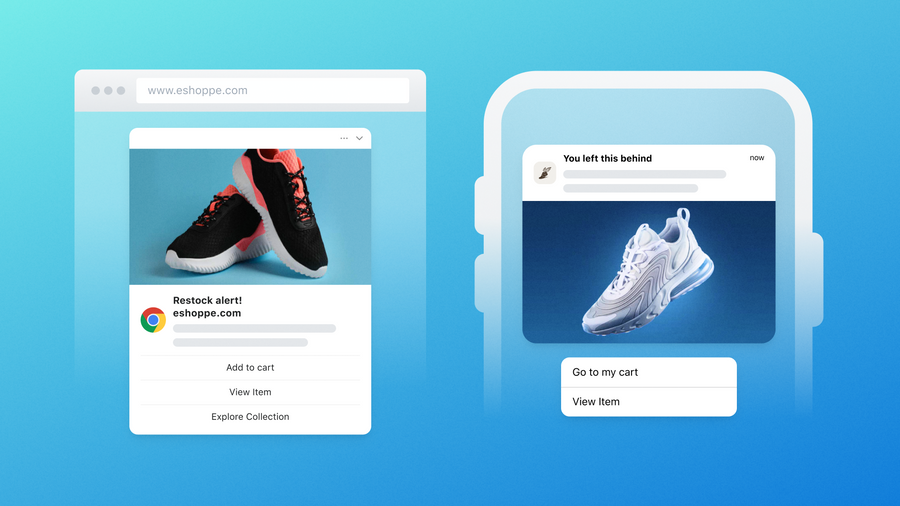
- Web Push: These notifications are sent from a website to a user’s desktop or mobile browser, even when the user is not on the website.
- Other Platforms: The reach of push notifications is expanding to include wearables like smartwatches, connected TVs, and even AR/VR headsets.
By purpose
- Transactional: Triggered by a specific user action or event, these notifications provide timely and valuable information. Examples include order confirmations, shipping updates, and account alerts.
- Engagement: Designed to bring users back into the app, these messages highlight new features, recommend relevant content, or deliver social alerts like @mentions.
- Promotional: These marketing-focused messages aim to drive conversions through announcements of flash sales, special offers, and abandoned cart reminders.
Why push notifications are critical for app success
Integrating push notifications into an app strategy is essential for growth and retention. This direct communication channel offers several key benefits that are detailed in many push notification guides.
- Boosts App Re-Engagement and Retention: Push is a powerful driver for bringing users back. By delivering relevant and timely content, apps can significantly increase the likelihood that a user will remain active over time.
- Drives Conversions: Timely alerts about sales, promotions, or back-in-stock items can create a sense of urgency and drive immediate purchasing decisions.
- Improves the User Experience: Mobile push notifications enhance the user journey by providing helpful transactional updates, creating a seamless and informative experience that builds trust.
- High Visibility and Engagement: Notifications appear directly on a user's lock screen or notification center, giving them high visibility. They consistently achieve higher engagement rates than other channels like email. A comprehensive push notification marketing strategy is a key part of any modern app's success.
What to look for in a push notification service
When evaluating the best push notifications providers, it is crucial to look beyond basic delivery. The right platform serves as a central hub for customer communication. When comparing different platforms, consider which features will best support your long-term growth.
Key capabilities to look for include:
- Advanced Personalization: The service should allow for segmentation based on user properties, in-app behavior, and historical data, not just basic fields like a first name.
- A/B and Multivariate Testing: Built-in tools for optimizing message content, delivery times, and calls-to-action are essential for improving performance.
- Intelligent Delivery: Look for features like send-time optimization, which delivers a message at the time a specific user is most likely to be active.
- Cross-Channel Capabilities: The best platforms support orchestration across email, SMS, and in-app messaging, allowing you to create unified and consistent user journeys.
- Actionable Analytics: A robust service provides a dashboard that tracks the full conversion funnel, including delivery rates, open rates, and direct revenue attribution.
- Reliability and Scalability: The provider must be able to handle high-volume sends without delays and offer features like rate limiting to protect your own servers from traffic spikes. There are many push notification software options available, so it's important to choose one that meets these criteria.
Push notification best practices for 2026
A successful strategy depends on more than just the tool; it requires following established best practices to build and maintain user trust. To learn even more, explore a full guide on best practices.
- Use a Soft Prompt to Earn Permission: Before showing the official OS permission prompt, use an in-app message or "push primer" to explain the value of turning on notifications. This is especially critical on iOS, where you only get one chance to ask.
- Personalize Beyond the First Name: Use behavioral data to send highly relevant messages. A notification about an item a user viewed is far more effective than a generic blast. Highly personalized notifications are known to significantly increase user engagement.
- Optimize Timing and Frequency: Respect user attention by not over-messaging. Use send-time optimization features and keep messages concise. Messages under 10 words often perform best.
- Use Deep Linking: Every notification should be a shortcut. Tapping it should take the user directly to the relevant screen inside the app, not just the home screen.
- Craft Compelling Copy: A notification has a title (around 50 characters) and a body (14-25 words). Use a clear call-to-action and write in a human tone. Avoid generic marketing language that can drive users away.
- Account for Platform Differences: Understand that iOS and Android handle notifications differently in terms of appearance, grouping, and how users manage them.
- Leverage for Retention: Create campaigns specifically designed to re-engage lapsed users with valuable content or special offers.
How to measure your push notification strategy
To understand the impact of your push notification strategy, you must track the right key performance indicators (KPIs).
- Opt-In Rate: This is the percentage of users who agree to receive notifications. A low rate may indicate that you are not effectively communicating the value of your messages.
- Open Rate (Direct and Influenced): A direct open is when a user taps the notification to open the app. An influenced open is when a user opens the app on their own shortly after receiving a notification. Tracking both gives a fuller picture of impact.
- Conversion Rate: This measures the percentage of users who completed a desired action (like a purchase) after receiving a notification. Define a clear goal for every campaign to track this effectively.
- Revenue Attribution: The most advanced analytics connect push campaigns directly to business ROI, showing how much revenue was generated from users who engaged with a notification.
By focusing on these metrics, you can gain a clear understanding of what works and continuously optimize your strategy for success.
An effective push notification strategy in 2026 is about delivering timely, relevant, and valuable messages that respect the user's attention. While the tools and user expectations have evolved, the fundamentals of earning permission and building trust remain paramount to success. By selecting the right service and adhering to best practices, you can turn push notifications into one of your most powerful channels for engagement and retention.
And if you’re evaluating platforms, OneSignal offers a free account so you can test these strategies with real users before committing.
Get Started for Free