Plain SMS has earned marketers’ trust because it is familiar, concise, and broadly accessible. Adding another format can raise practical concerns about reach, cost, approval, production, and measurement.
RCS (Rich Communication Services) is meaningfully different from SMS, but the practical choice is usually a measured hybrid strategy rather than a complete channel switch.
- RCS adds branded, media-rich interactions inside the recipient’s default messaging app.
- SMS remains the dependable baseline for simple alerts and broad coverage.
- Automatic SMS fallback makes a hybrid program practical when RCS is unavailable.
- Campaign-level testing should determine whether RCS improves conversion, retention, or customer value for your audience.
Is RCS actually different from SMS?
The short answer
Yes. SMS is a text-only format with messages of up to 160 characters. RCS creates a branded, app-like experience with sender identity, read receipts, carousels, action buttons, and keyword replies.
The useful question is not whether RCS has more features. It is whether those features solve a specific marketing problem. In an sms vs rcs decision, SMS can suit concise alerts, and RCS deserves testing when visual context, trust, or an easier action may affect conversion.
SMS vs. RCS at a glance
SMS supports plain text, numbers, and emojis. MMS extends SMS with images, video, audio, GIFs, and up to 1,600 characters of accompanying text. OneSignal’s RCS documentation explains how RCS adds branded rich content and automatic fallback to these established formats.
Business text message marketing differs from person-to-person texting because it requires deliberate sender management, consent controls, campaign logic, and performance measurement. The underlying format matters, but the operating model matters just as much.
When richer messaging solves a real marketing problem
RCS is most useful when the limitations of plain text create friction. A product carousel can give a shopper relevant choices without sending several links. A verified sender identity can help a recipient recognize who sent a booking update. An action button can make the next step clearer than a pasted URL.
These features make RCS a reasonable test candidate for:
- Product discovery that benefits from images and multiple options
- Cart recovery that needs a direct route back to checkout
- Promotional offers with visual terms or featured products
- Booking messages with a confirmation, rescheduling, or directions action
- Status updates that benefit from a recognizable branded sender
SMS remains suitable when the information is short, urgent, and easy to act on without rich content. An appointment reminder, security notice, or service interruption alert may gain little from a carousel or media card.
What happens when a recipient can’t receive RCS?
The short answer
RCS capability is not universal. A well-designed program uses SMS fallback rather than forcing an either-or choice between the formats.
The recipient’s device and carrier must support RCS, and availability varies by country. Automatic fallback lets you build a richer message for eligible recipients without excluding people who can receive only SMS.
How automatic fallback protects reach
OneSignal automatically sends an SMS fallback when an RCS message fails to deliver, including cases where the recipient’s device or carrier does not support RCS. This fallback uses the program’s SMS sender resource.
Fallback results still depend on the recipient, carrier, sender configuration, and market. Treat it as an operational safeguard rather than a universal delivery guarantee.
Text-only RCS messages follow a specific rule: their RCS text becomes the fallback content instead of using a separate SMS fallback field. Review that text as both an RCS message and a standalone plain-text message before launch.
How to design the fallback message
Write the fallback as a complete message. It should preserve the essential offer, status, deadline, or next step without relying on an image, carousel, or button.
Run these checks before approving the campaign:
- Name the brand clearly where sender recognition may be limited.
- Preserve the destination or response path, such as a functional link or supported reply instruction.
- Keep the copy concise enough to work as a plain text message.
- Use a CTA that survives fallback, without references such as “tap the card below.”
- Confirm the meaning independently, so missing rich content does not remove a condition or critical detail.
Preview the two experiences separately. The RCS version can use presentation and interaction to reduce friction, but the SMS version still needs to carry the campaign’s essential value.
Will RCS cost more?
The short answer
Yes, RCS is a premium format relative to standard SMS. The useful budget comparison is cost per conversion at the campaign level, rather than cost per send in isolation.
RCS also requires a premium RCS sender resource in addition to an SMS sender resource. That structure introduces sender and production considerations that should be included in the business case.
Compare cost per conversion, not only cost per send
A low send price does not establish campaign efficiency. Compare the complete inputs and outcomes for equivalent SMS and RCS variants:
- Send volume and messaging cost
- Design, copy, approval, and quality-assurance effort
- Clicks, replies, or completed message actions
- Downstream conversions
- Unsubscribe or complaint signals
- Revenue, retention, or another value metric already used by the business
- Total cost per completed conversion
Define the primary conversion before the campaign launches. For cart recovery, that may be a completed purchase. For booking messages, it may be a confirmed or rescheduled appointment. This prevents engagement signals from becoming substitutes for the outcome that funded the campaign.
Where to test first
Start with one or two high-value moments where rich content or buttons could plausibly remove a step. Cart recovery, product discovery, promotional offers, and booking confirmations can all qualify, depending on the customer journey.
Choose a campaign with a clear action and measurable endpoint. A vague awareness message makes it difficult to separate the effect of RCS from normal campaign variation.
Keep SMS for simple, urgent messages that need broad reach and no visual merchandising. Premium production has little purpose when a short line of text communicates the required action.
Do I need a new phone number or app?
The short answer
Recipients do not need to install a separate brand app. RCS arrives in their default messaging app, where the messaging environment supports it.
Your sender setup does change. RCS uses a verified branded sender identity with a business name, logo, and color rather than relying on the phone-number identity associated with SMS.
What sender setup changes
An RCS sender resource does not replace your SMS sender resource. The RCS resource serves supported recipients, and the SMS resource handles fallback.
RCS also has a separate approval process. Prepare the required brand assets and program information before submitting:
- A logo that meets the applicable requirements
- A brand color
- An agent description
- A launch URL
- A sender strategy for each messaging program
- Approved fallback copy
- A named owner for approval responses and carrier coordination
Each program type needs a dedicated sender. If a subscriber texts STOP to a shared sender, the opt-out applies to every message from that sender, including transactional updates and one-time passcodes the subscriber may still want. Separate promotional, transactional, and authentication programs where appropriate, as outlined in the SMS, MMS, and RCS overview.
What does not change for recipients
Recipients continue reading messages in a familiar inbox. They do not need to learn a separate brand channel or download another application to view the RCS experience.
Your customer-facing fundamentals also remain in place. The message needs recognizable context, relevant content, a clear action, and appropriate preference controls. Rich presentation cannot compensate for weak targeting or an unclear offer.
Test both the rich message and its fallback on representative devices. Confirm that buttons lead to the right destination, media crops correctly, and the plain-text version makes sense on its own.
Is RCS available to my audience?
The short answer
RCS availability must be validated for your audience and market, but incomplete support does not require abandoning the campaign when SMS fallback is ready.
Availability varies by country. A country that supports OneSignal SMS does not necessarily support RCS, and support also depends on the recipient’s device and carrier.
The approval and market reality
RCS approval typically takes eight to 16 weeks. Begin the sender application well before a seasonal promotion, product launch, or other fixed campaign date.
In the United States, carriers prioritize notable brands, high-quality rich content, and established SMS volume.
Starting an RCS sender application provides a test RCS sender resource immediately. Your team can compose messages and send tests to its own devices during the application process. Production sending still requires carrier approval.
Device support also depends on the messaging environment. Apple’s explanation of RCS and SMS/MMS shows that available functions vary with the device, recipient, and messaging service, so avoid assuming feature parity across every iOS and Android combination.
How to assess eligibility before a launch
Complete a readiness review before assigning RCS to a campaign deadline:
- Map audience countries. Identify the markets that account for the intended send volume.
- Confirm the campaign deadline. Work backward from the launch date using the expected approval window.
- Verify the SMS sender. Make sure the fallback resource is approved and appropriate for the program.
- Check RCS approval status. Separate test access from production authorization.
- Test device rendering. Review text, cards, media, buttons, and destinations on available supported devices.
- Approve the fallback. Treat the SMS variant as campaign content, not an administrative afterthought.
Build a launch plan that can proceed through SMS if production RCS approval misses the deadline. That keeps a fixed campaign from depending on an external review finishing on a specific day.
Can RCS support automated journeys?
The short answer
RCS can support automated text message marketing when the platform coordinates trigger logic, recipient eligibility, fallback, and measurement. Automation should choose the appropriate experience without creating a disconnected campaign for each format.
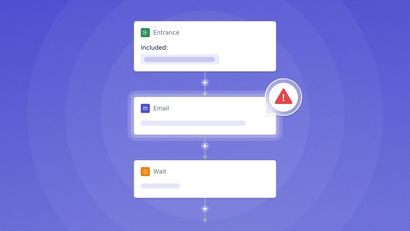
OneSignal Journeys supports no-code messaging flows across channels for onboarding, retention, and re-engagement. This lets you place RCS and SMS within a broader customer Journey rather than manage them as isolated sends.
A trigger-to-conversion journey example
A cart-abandonment Journey can begin when a known shopper leaves relevant products behind. The workflow qualifies the recipient, sends a rich RCS experience when available, and preserves the recovery action through SMS fallback.
Journey flow:
- Event trigger → audience qualification → rich RCS message with an action → SMS fallback if RCS is unavailable → conversion event → reporting and optimization
The RCS message might show abandoned products in a carousel and provide a purchase action. Its SMS fallback should identify the brand, state the recovery prompt, and include a working route back to the cart.
Use Tags to store custom metadata such as preferences, behaviors, and user properties. Segmentation can then build dynamic groups from behavior, location, tags, and subscription status. Personalization can use those details in message content, and Deep Linking can send the recipient to a relevant app screen or web page.
What to look for in marketing automation software
Evaluate marketing automation software based on how it manages the full workflow, not only whether “RCS” appears on a feature list. Look for:
- Native SMS and RCS support
- Automatic fallback management
- Dynamic segmentation
- Trigger-based journeys
- Cross-channel coordination
- Message analytics and conversion tracking
- Controlled testing
- CRM and data integrations
- Consent and preference controls
- Sender approval and management workflows
OneSignal’s customer engagement features include Journeys, Tags, Segmentation, personalization, Deep Linking, analytics, A/B testing, and Custom Outcomes. The platform also connects with third-party tools, CRMs, and data pipelines through SDKs or webhooks.
API access matters when your messaging logic depends on internal events or operational systems. OneSignal provides an API reference for automating messages, managing users, and tracking delivery, which helps teams connect lifecycle communication with their existing data flows.
How do I measure RCS against plain SMS?
The short answer
The most credible RCS business case comes from a controlled test using your audience and predefined success criteria. An industry benchmark cannot tell you how your offer, creative, audience, and conversion path will interact.
RCS reporting includes standard SMS metrics plus a Read metric because RCS supports read receipts. Read data can help diagnose message engagement, but conversion remains the stronger business outcome.
Build a fair RCS versus SMS test
Use a low-risk rollout that keeps campaign intent consistent across the test groups:
- Select a high-value use case. Choose a message with a clear action and conversion event.
- Create comparable groups. Segment eligible RCS recipients and establish a suitable SMS control group.
- Match the message intent. Keep the offer, timing, audience logic, and CTA destination as consistent as the formats allow.
- Retain a tested fallback. Confirm that unsupported recipients receive a complete SMS experience.
- Define the primary conversion event. Set it before launch and document how it will be captured.
- Compare the full result. Review delivery, reads where available, actions, conversions, unsubscribe signals, and cost per conversion.
- Expand only when warranted. Increase use after the measured business outcome justifies the added cost and operational work.
OneSignal provides messaging analytics, A/B testing, and Custom Outcomes for tracking conversion events and measuring message impact. Keep the test window and audience rules stable enough to make the result interpretable.
Choose metrics that reflect the business outcome
Delivery confirms that a message reached the channel endpoint. A read indicates that the recipient opened the RCS conversation where the signal is available. Neither proves that the campaign created business value.
Build a measurement hierarchy around the journey:
- Operational health: sends, delivery status, fallback behavior, and errors
- Message engagement: reads, clicks, replies, and button actions where available
- Conversion: purchases, bookings, renewals, or another defined action
- Customer impact: retention, repeat activity, and long-term customer value
- Program health: opt-outs, complaints, and cost per conversion
Event Streams can send real-time messaging events to external systems when you need to join channel data with your existing analytics or automation stack.
Use a compact decision rule: expand RCS messaging where it improves the defined business metric enough to justify its incremental cost and operations. Retain plain SMS where reach, speed, simplicity, or message type makes it the stronger fit.
What should stay on plain SMS… and what should you test next?
Keep SMS for the moments where simplicity wins
Plain SMS remains a sensible choice for concise transactional information and baseline coverage. It fits messages where the recipient needs one fact or one immediate action, such as a time-sensitive status notice or short confirmation.
RCS is a testable upgrade when verified identity, rich context, or an in-message action could reduce friction. The decision should follow the customer moment. A complex format adds little when the message already works as a clear sentence.
Use your existing text message marketing program as the baseline. Identify the messages that ask customers to interpret several links, browse products, verify an unfamiliar sender, or complete a multi-step action. Those are stronger RCS candidates than simple alerts.
Make the next RCS test small, measurable, and reversible
A controlled first test limits operational risk and gives you evidence for the next budget decision:
- Confirm sender and approval requirements.
- Select one campaign with a measurable action.
- Prepare both the RCS and SMS fallback variants.
- Define the conversion event and reporting method.
- Test rendering, links, automation, and fallback behavior.
- Scale only after the observed result supports expansion.
OneSignal can coordinate SMS and RCS, automatic fallback, Journeys, segmentation, testing, and analytics within the same customer engagement program. Use those capabilities to run a contained experiment, then let your conversion economics decide where each format belongs.
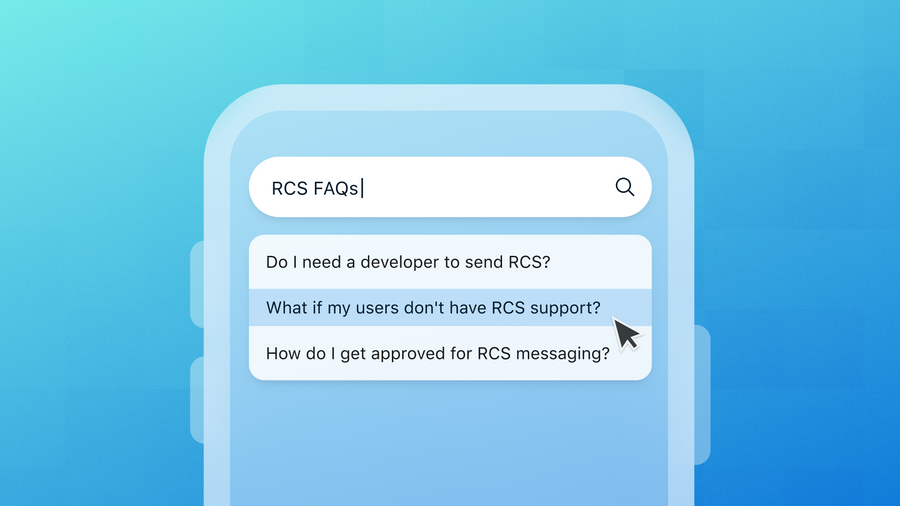
Frequently asked questions about RCS and SMS marketing
Do promotional RCS campaigns need customer consent?
Yes. Promotional messaging requires explicit consent and an easy way for recipients to opt out. Double opt-in is required for cart-abandonment programs in the United States and is strongly recommended for high-volume promotions because it reduces spam complaints, improves list quality, and strengthens consent records, as detailed in OneSignal’s promotional messaging guidance.
Can I use keyword replies to manage text message preferences?
Yes, if the sender can receive replies and the messaging setup supports keywords. A keyword-based preference center can apply data tags, which you can use later to target subscribers according to their stated interests.
Does an alphanumeric sender ID support RCS keyword replies?
No. An alphanumeric sender ID cannot receive replies, so it cannot support keyword-based preference management. Use a reply-capable sender when your program depends on inbound keywords for opt-outs, preferences, or other responses.
Where SMS and RCS actually meet
If any of this made you want to see RCS working with automatic SMS fallback rather than reading about it, OneSignal handles both channels, plus the Journey logic, segmentation, and sender approval workflow that make a hybrid program actually run itself. Try OneSignal free and build your first cart-recovery or booking Journey without waiting on a separate integration for each format.
Get Started for Free