Industry
FinancialUse case
Transactional Confirmations & updates Re-engagementMessaging channel
RCS Email In-app messaging Mobile push notifications SMSRegion
North AmericaKey takeaways
The problem with being a number
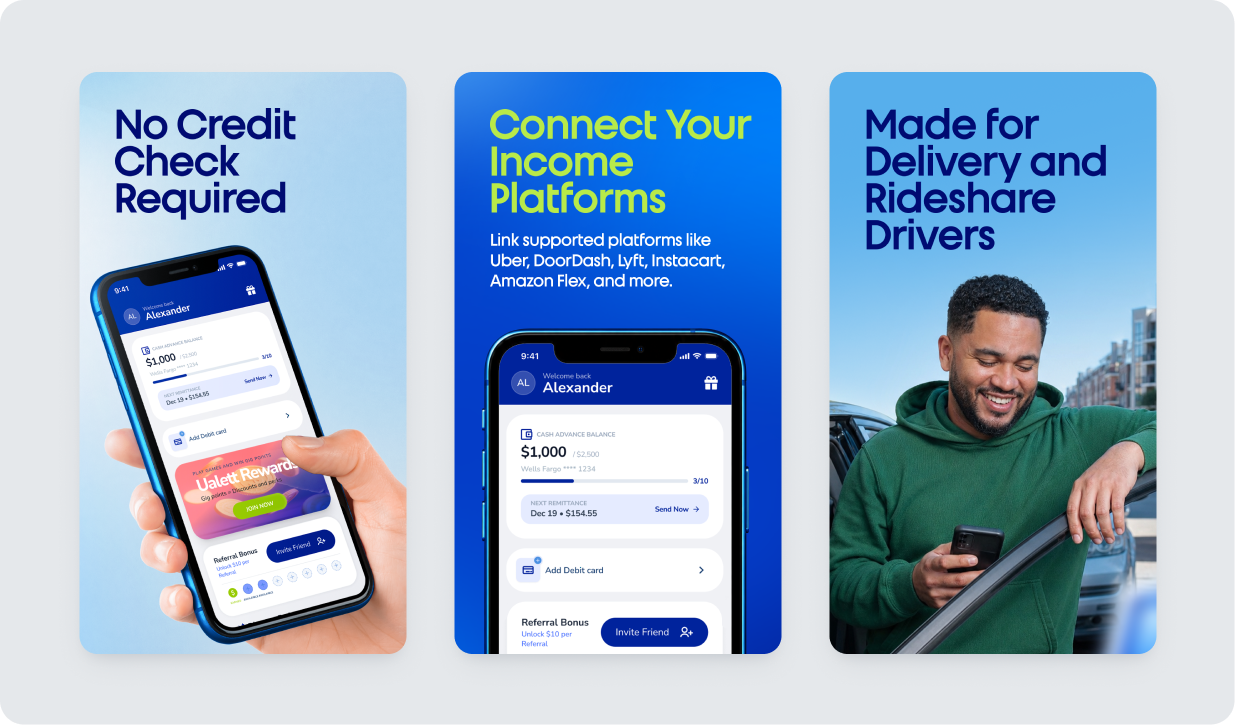
Ualett helps gig workers (drivers, delivery workers, and independent contractors) access funds when they need them most. Their model runs on time-sensitive interactions: cash advance reminders, remittance prompts, OTP codes, fraud alerts. Every message they send is critical, and in fintech especially, many of these run the risk of looking like spam.
When your fraud alert comes from the same type of 10-digit number as a phishing attempt, brand trust doesn't matter, because there's no brand to trust. You're just another unrecognized number.
For a company whose tagline is "Built on Trust," that produced some serious tension.
If I don't know who it's coming from, I'm not reading it. If there's an unrecognized number, I'm definitely not likely to respond.
Ualett's previous messaging stack was built around batch-and-send. For a product serving gig workers with unpredictable income and irregular schedules, a cash advance reminder sent on a Tuesday morning to a driver who got approved on a Friday night was irrelevant by the time it landed.
We needed a platform that could handle event-triggered messaging at scale without being clunky. OneSignal lets us build these responsive, behavior-triggered campaigns, and RCS support was essential for us this year.
A branded sender changes everything
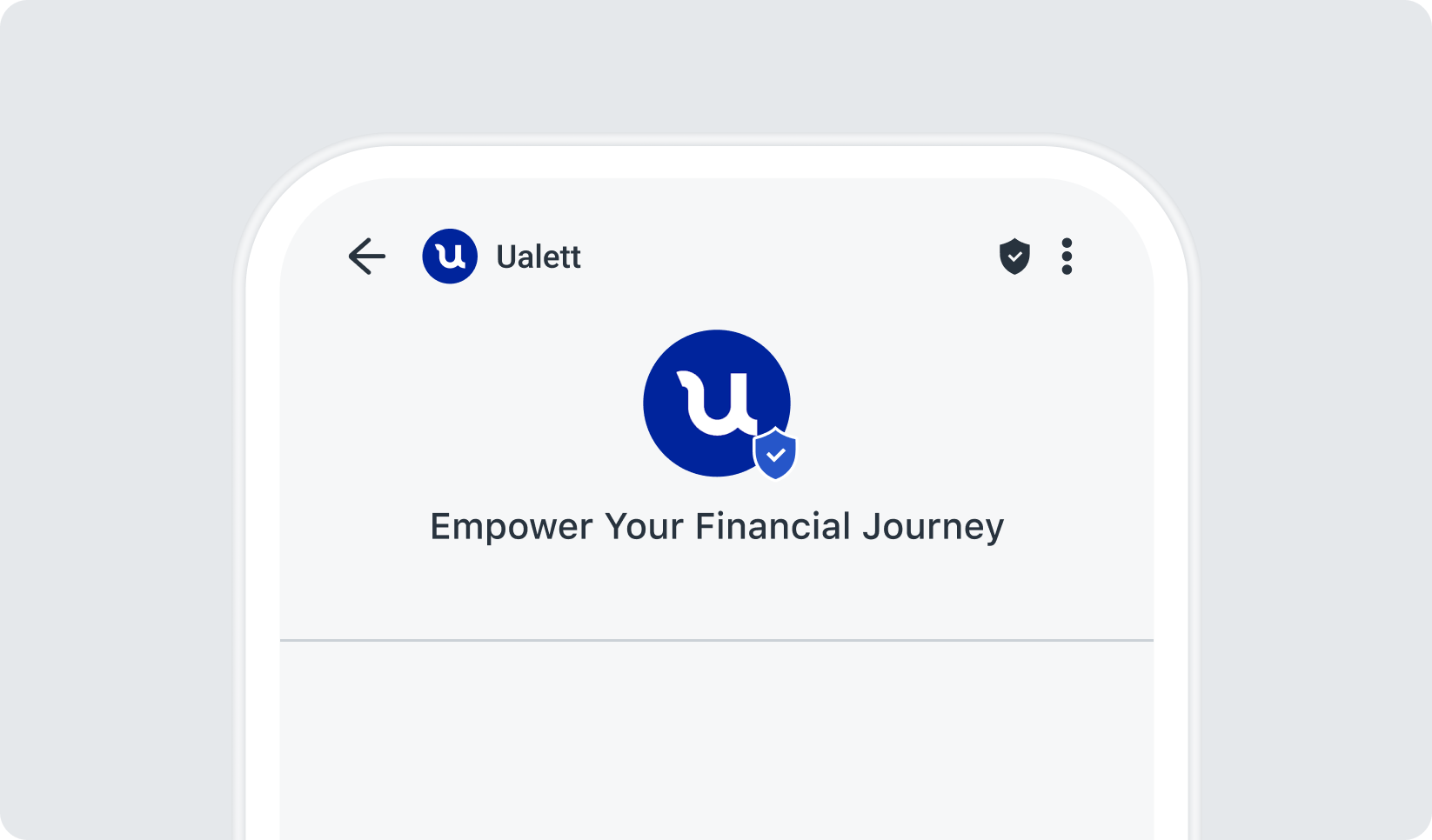
RCS gave Ualett what SMS couldn't: a verified identity baked into every text message. Before a single word is read, the recipient already knows who it's from.
For a fintech operating in a space riddled with financial scams and impersonation, that verification is half the battle.
The marketing team first surfaced RCS to product. The pitch didn't need much defending: Ualett's competitors are sending the same unbranded messages from the same-looking numbers. Brand recognition at the moment of delivery was a differentiator they could finally act on.
The RCS approval process took a couple of months. Ualett updated their terms of service and privacy policy to explicitly reference RCS communications, a step that required cross-functional coordination with their engineering team. OneSignal managed the carrier compliance process and worked with Ualett to ensure the application was solid before submission.
There was more tech engagement than we realized... but OneSignal did a really great job of prepping us to get ready to go through the RCS process.
Once approved, they launched with marketing campaigns, the highest-trust-stakes use case, and the one with the most obvious RCS visual advantage. The logic was simple: if the marketing experience is branded, the transactional one should be too.
The first campaign: Getting gig workers back on track
Ualett's gig worker community is most active on weekends. Drivers are out, deliveries are running, and for users who've fallen behind on a cash advance (what Ualett calls getting "off track") the weekend is prime time to re-engage.
Their first major RCS campaign launched on a Friday. The target: a specific segment of clients with outstanding advances, timed to reach them when weekend income was most likely.
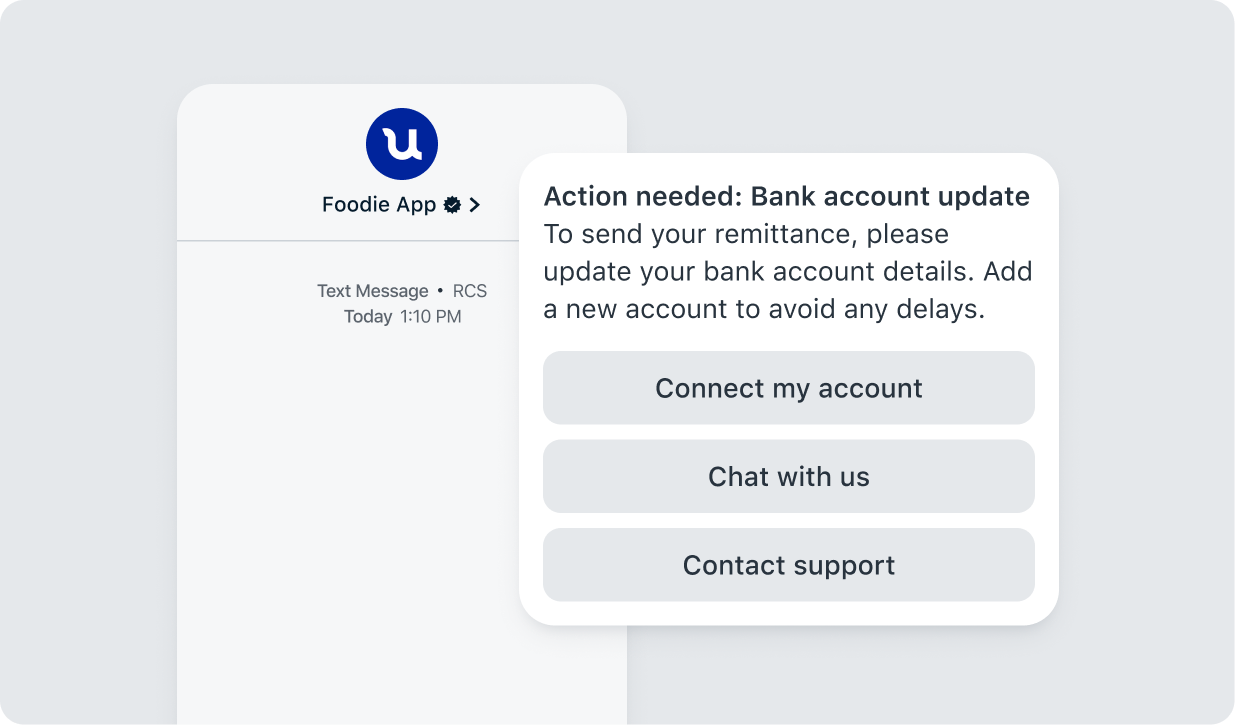
The message led with a branded card image, a contextual headline about weekend earnings, and a clear value offer: help getting back in good standing. Three call-to-action buttons gave recipients three paths forward: deep-link into the app, land on an informational page, or call the servicing team directly.
That last option is key. With traditional SMS, Ualett had one CTA per message. With RCS, they could present the full decision tree (self-serve or call for help) without forcing a choice the user wasn't ready to make.
Instead of having people pointed toward only one option, we can now give them the option to contact us directly, or solve the problem on their own.
Results: Record weekend activity
The campaign outperformed anything Ualett had seen from comparable SMS sends.
- ~40% open rate on the Friday send (note: read receipts are not universal, so the true figure may be higher)
- More weekend app activity than ever recorded — Ualett saw users completing actions (adding debit cards, making remittances) at higher volumes than any previous weekend
- Strong inbound call volume — recipients engaged not just with the message, but with the servicing team CTAs, generating calls that converted to account recoveries
Whether the result came from the branded sender, the image, or the multi-CTA structure, Andrea's instinct points to the trust signal as the primary driver: the recognition that this message was from someone the recipient knew.
Two more use cases, one clear pattern
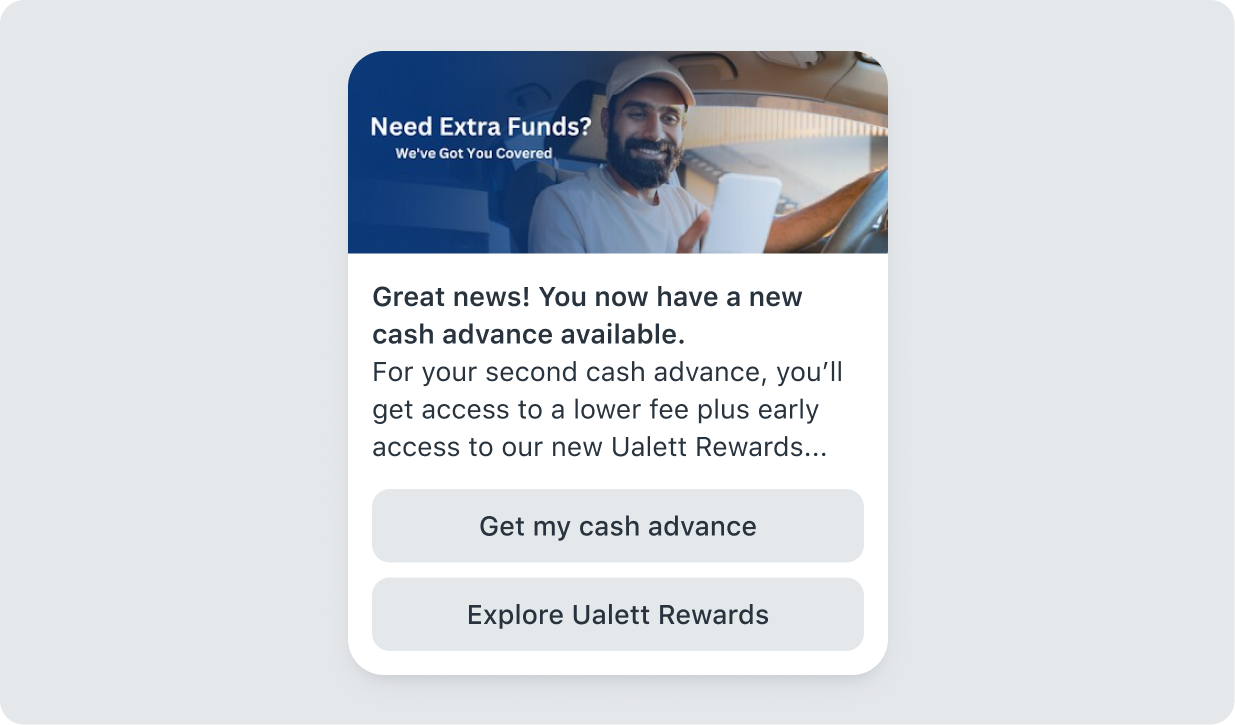
After the initial Friday campaign, Ualett expanded RCS into additional use cases, including debit card onboarding and post-approval cash advances.
The debit card campaign (June 26–July 8) drove 82% delivery, a 29% read rate, and 138 users connecting their debit card directly from the message. Strong numbers for a first run, but the automated cash advance flow outperformed it.
That flow triggers 30 minutes after a user is approved for a cash advance, hitting them at the exact moment intent is highest. It delivers a 37% read rate with 168 conversions (the best-performing RCS campaign in Ualett's stack.)
The takeaway for each? Timing and context matter more than creative variables. The message that arrives when the user is ready to act wins, every time.
More than RCS: A full omnichannel stack
Ualett's engagement strategy doesn't live in a single channel. They run a full omnichannel setup through OneSignal: push notifications, SMS, RCS, and email.
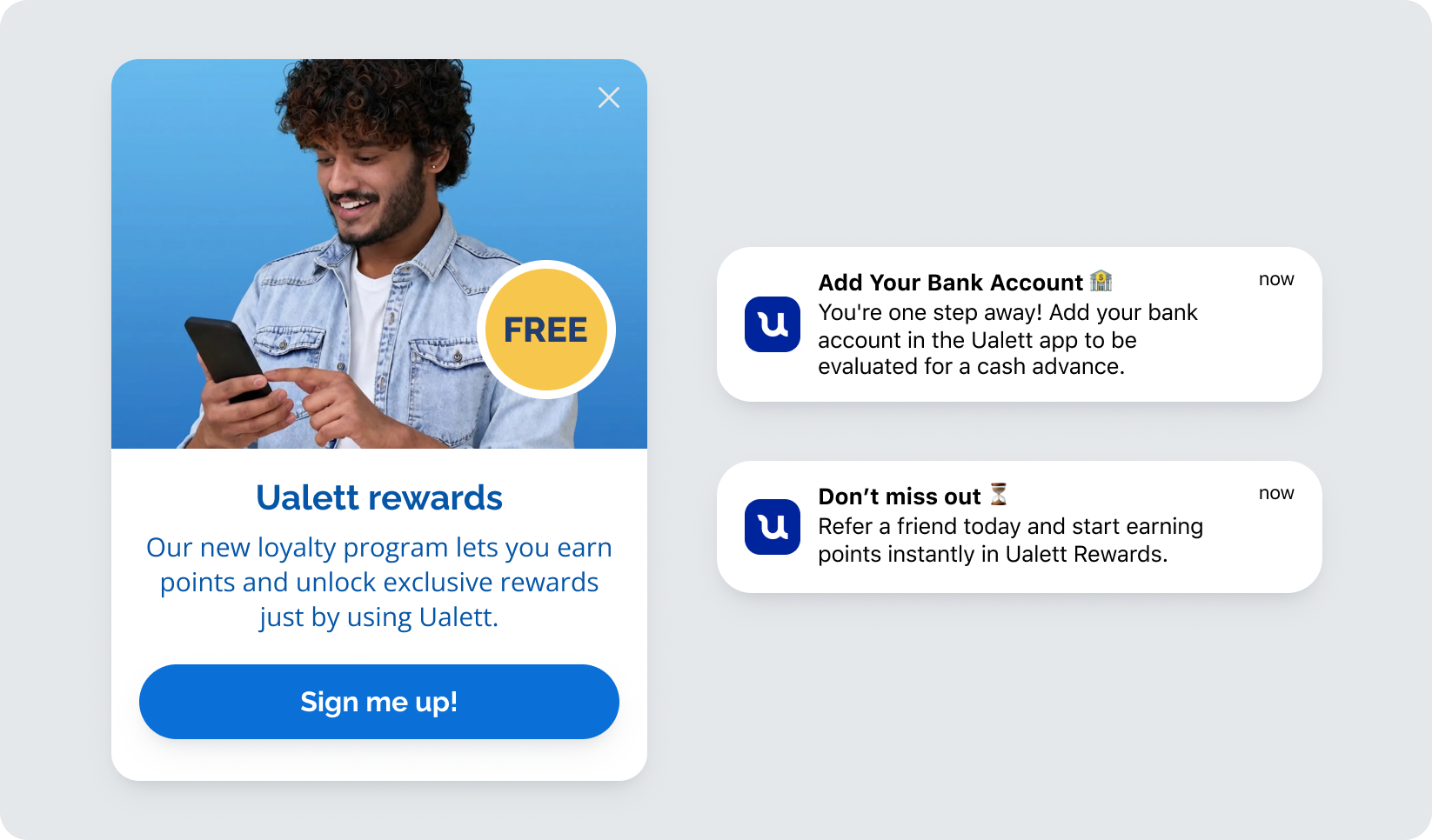
Transactional events trigger follow-up sequences and marketing campaigns layer on top of those flows. The channels are distinct in purpose: RCS handles high-value, action-oriented messages where brand trust and rich CTAs matter most. Email covers longer-form content, push handles real-time alerts, and SMS remains a reliable fallback.
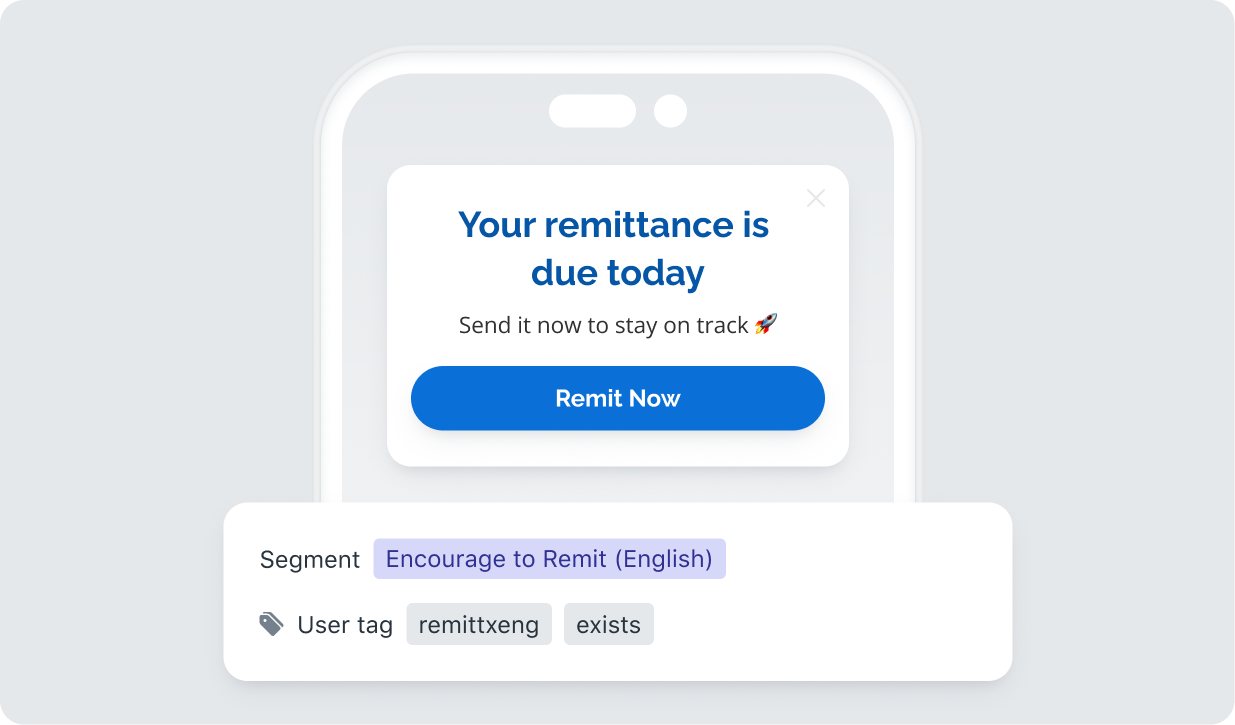
Ualett's targeting is built entirely on behavior and account status (debit card connection, cash advance availability, new client flags) not demographics. That same logic drives timing: most messages are triggered by approvals, milestones, or account changes rather than sent on a schedule. A driver who gets approved for a cash advance at 11pm on a Friday hears from Ualett 30 minutes later, not Monday morning.
What's next: 20–30 messages in the queue
Ualett catalogued 20 to 30 existing SMS messages they intend to migrate to RCS cards or rich media. Each one is being evaluated for which image to use, which CTAs to include, and which deep links to wire up.
The common thread: anywhere that SMS was sending a user down a single path, to the app, or nowhere, RCS gives them multiple options. The channel adds both branding and decision architecture to the message itself.
They're also exploring how the carousel format could work for campaigns with multiple distinct offers, giving users a swipeable experience rather than a single static card.
A year ago, Ualett's messages came from an unrecognized number on a preset schedule. Now they arrive branded, behavior-triggered, and timed to the moment a user is ready to act… and the conversion data shows the difference.