Industry
Gaming Web3Use case
Onboarding Re-engagement RetentionMessaging channel
Email Mobile push notificationsRegion
GlobalKey takeaways
When players own the game
Sky Mavis is the company behind Axie Infinity, a crypto-native gaming universe where players truly own their in-game assets, and Ronin, the blockchain infrastructure that powers it. The company also runs a publishing arm that invests in and supports third-party game studios building on Ronin.
That ownership model changes the dynamic between platform and player. When someone holds assets that have real value, they pay closer attention to everything the company communicates.
That makes every message higher stakes, and it means earning trust through clear, relevant communication isn't optional.
Outgrowing the early setup
Sky Mavis started where a lot of fast-growing companies start: scrappy tools that worked until they didn't. Early on, the team used Substack for email, which was serviceable for maintaining a list of addresses, but with no path toward personalization, segmentation, or visual flexibility at scale.
As the ecosystem grew from a single game to a multi-title platform with third-party studios and distinct player segments, the limitations became obvious. There was no way to automate workflows, no way to differentiate messaging by behavior, and no way to send at the right time to a global audience spanning dozens of time zones.
Building for relevance, not volume
Sky Mavis adopted OneSignal and began rebuilding their messaging strategy around a core principle: relevance over reach. In an ecosystem where users have a direct financial stake, blasting generic notifications erodes trust.
When you suddenly have hundreds of thousands of users and you want to deliver more personalized, timely notifications or messages with more involved graphics, you need a bigger and better platform. OneSignal was that platform for us.
The shift played out across a few dimensions:
Automated journeys replaced manual sends. Welcome sequences now guide new users through onboarding, and triggered messages respond to specific player actions rather than relying on batch-and-blast campaigns.
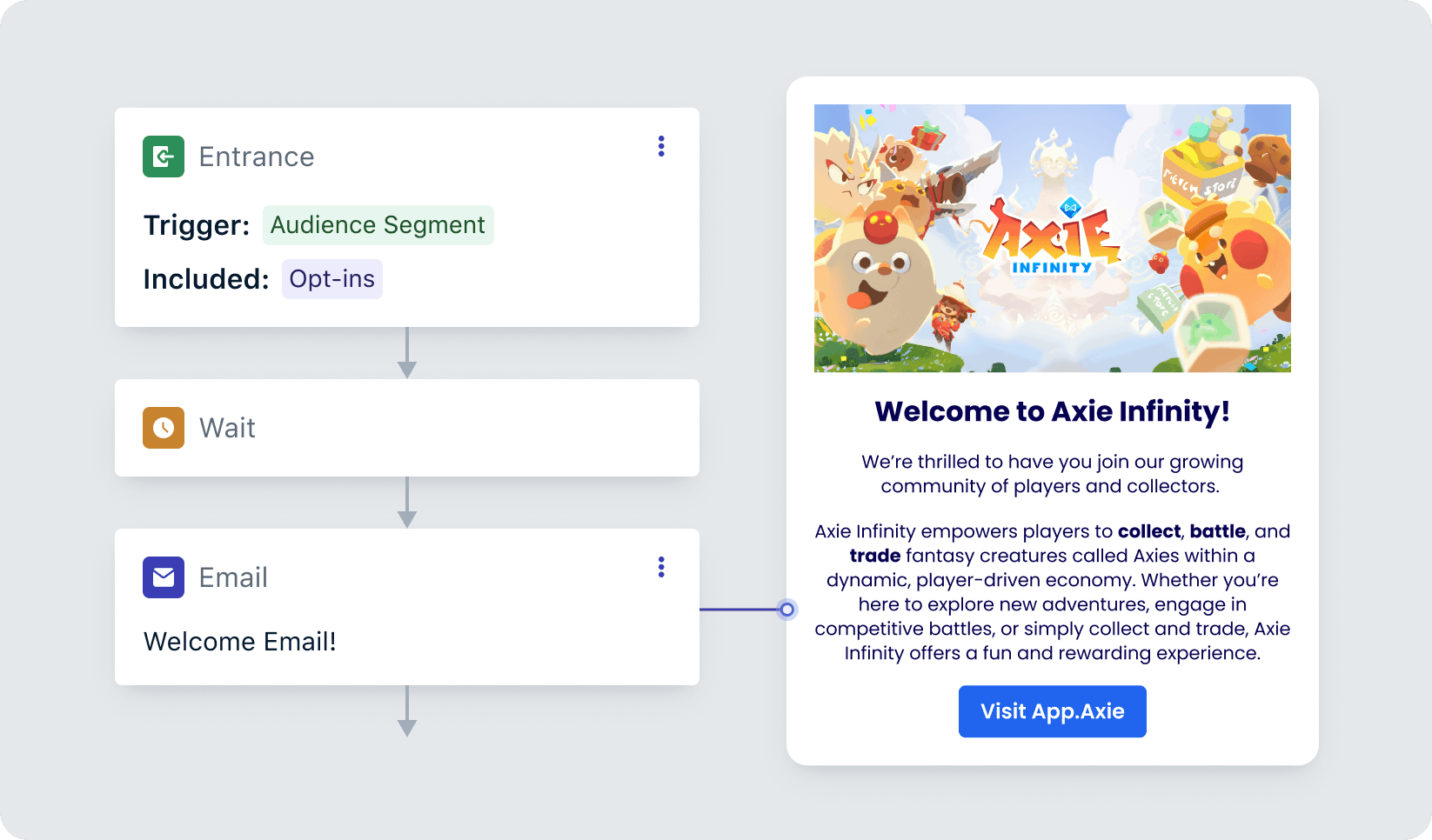
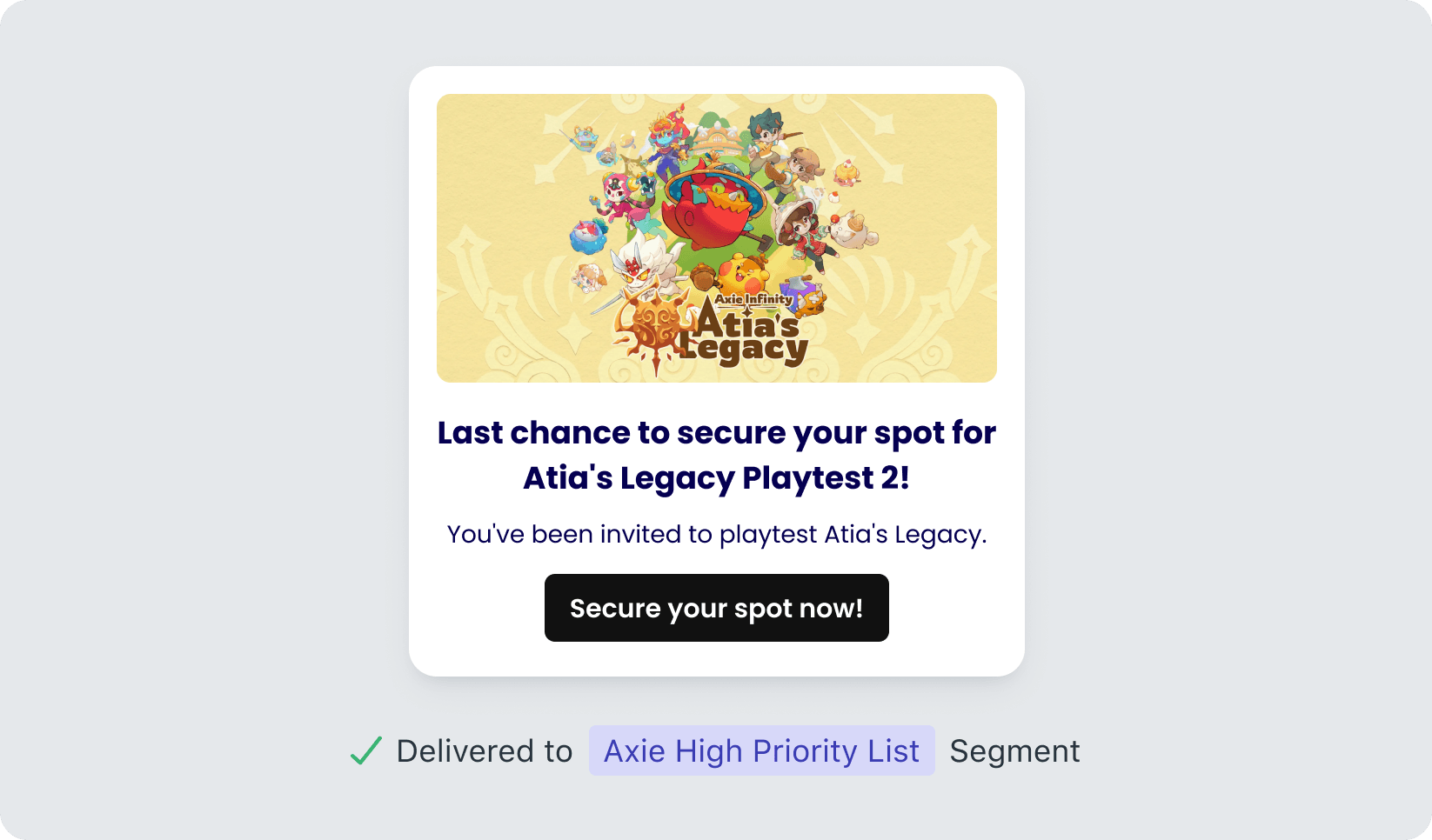
Behavior-based segmentation became the backbone of targeting. Because blockchain activity is public, Sky Mavis can identify high-engagement players, track trading and purchase behavior, and distinguish devoted "super fans" from casual users. That data feeds directly into how they segment and message. For example, exclusive play test invitations go only to players whose on-chain history and engagement patterns qualify them, not to the full list.
Channel strategy got intentional. Twitter handles public announcements and sentiment. Discord serves as the space for deeper community conversation. Email reaches users regardless of whether they check social media daily, with timezone-specific delivery. Push notifications handle time-sensitive, personalized triggers. Each channel has a role rather than duplicating the same message everywhere.
It can be really hard to get started in blockchain gaming if you don’t know much. We didn’t have welcome journeys before OneSignal. Now when a user onboards, they have a simple flow they can follow and can get started in our ecosystem.
The numbers after the switch
The most immediate impact showed up in email performance. On previous platforms, open rates hovered between 13–18%. After moving to OneSignal and implementing tighter segmentation (specifically cleaning lists and excluding inactive users) open rates now consistently sit above 20%, with some sends hitting 30%.
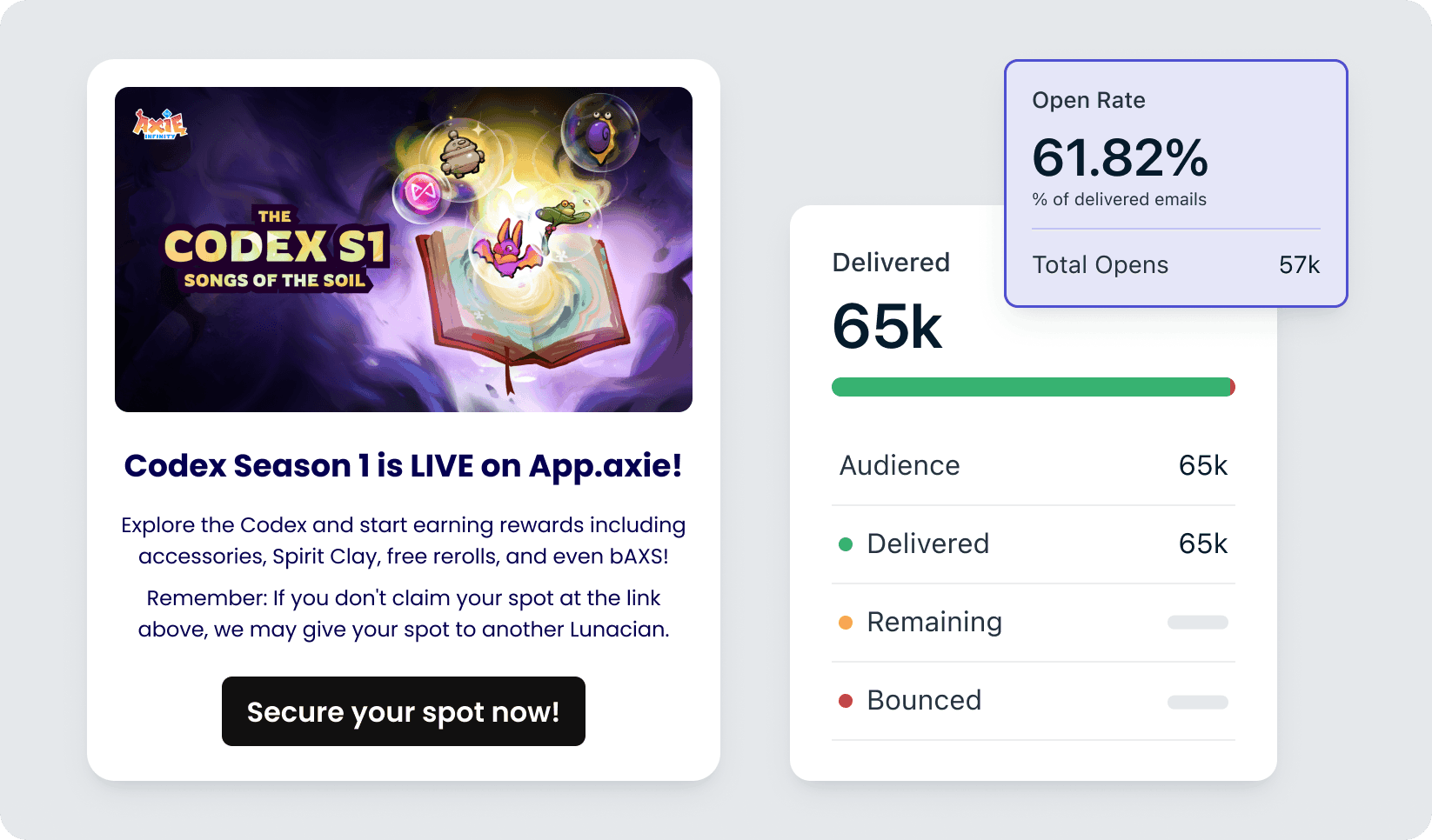
That improvement came from sending fewer, personalized emails to people who actually wanted them, not from increasing volume. The same philosophy extends to push notifications, which the team views as their biggest untapped opportunity for deeper engagement as they scale.
With OneSignal we’re able to get higher open rates because we can exclude people who aren’t going to open our emails. With other email platforms we could achieve open rates of 13%, 15%, maybe 18%. But with OneSignal we consistently achieve email open rates of above 20% and sometimes 30%. It’s almost a 2x improvement compared to other platforms, and it feels easy.
Community as co-creators
One thing that sets Sky Mavis apart from traditional gaming companies is how directly they involve their community in decisions. Rather than shipping updates and hoping for the best, they actively pull players into naming projects, shaping features, and testing new titles.
That philosophy extends to how they think about communication structure. Messaging flows from multiple voices — official accounts, founders, and "Ronin Vanguard" team members — meeting players on whichever platform they prefer. It's a founder-led marketing approach where authenticity matters more than anything.
For a company whose entire value proposition rests on the idea that players are true stakeholders, that consistency between product philosophy and communication style is what makes the messaging believable.
What's next
Sky Mavis is continuing to expand their use of push notifications, which they see as the next major lever for player engagement. As the Ronin ecosystem grows and more third-party studios bring their own audiences onto the platform, the ability to segment, personalize, and automate across an increasingly diverse player base becomes increasingly important.
The playbook is the same one that got them here: understand who your users are, communicate in a way that respects their stake in the ecosystem, and send fewer messages that matter more.