There is a tired religion in software: acquisition is growth.
But customers don’t want to “be acquired.” Customers reward trust and relationships that are built over time: the right first impression, a conversation that stays relevant, and a relationship that doesn’t decay the moment you sign up.
OneSignal’s platform facilitates our customer’s ability to onboard, engage, and retain their users in order to deliver real growth in this increasingly noisy AI world.
Onboard: Ending the cold start
Onboarding is where good intent goes to die, often because the first week is friction disguised as “setup.”
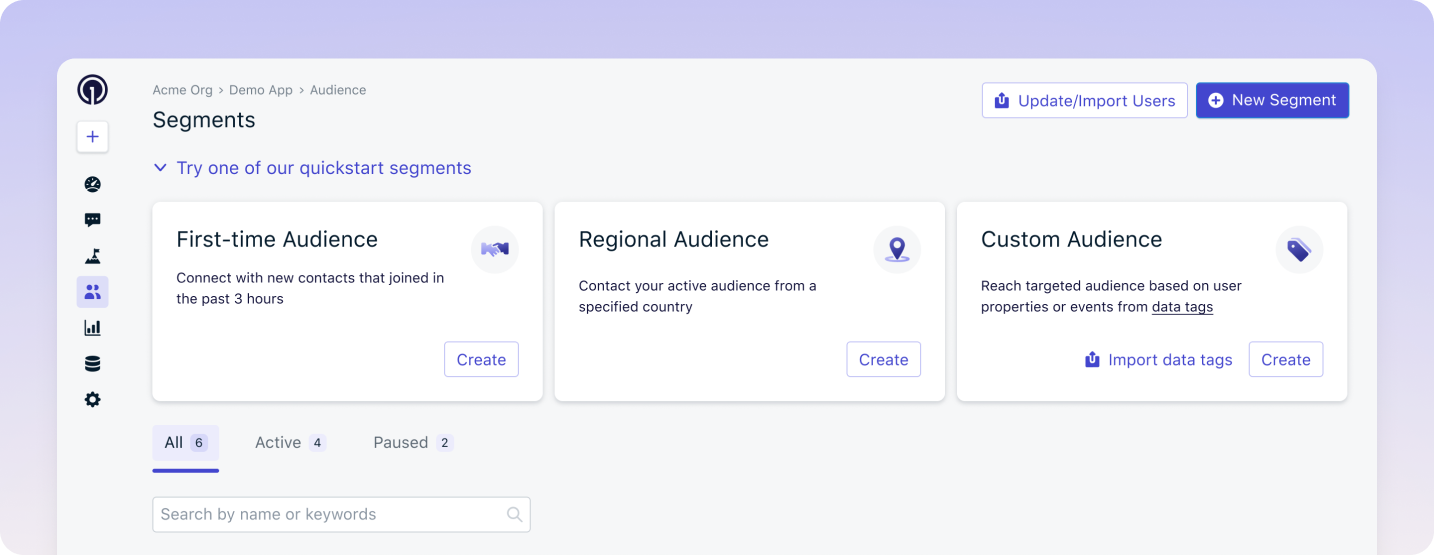
This year, we kept attacking that cold start from multiple angles. We made Journeys easier to begin with quickstart Segments and quickstart templates, so teams can launch a real lifecycle motion without inventing everything from scratch (see: What’s New: Building a More Powerful & Personal Journey Experience).
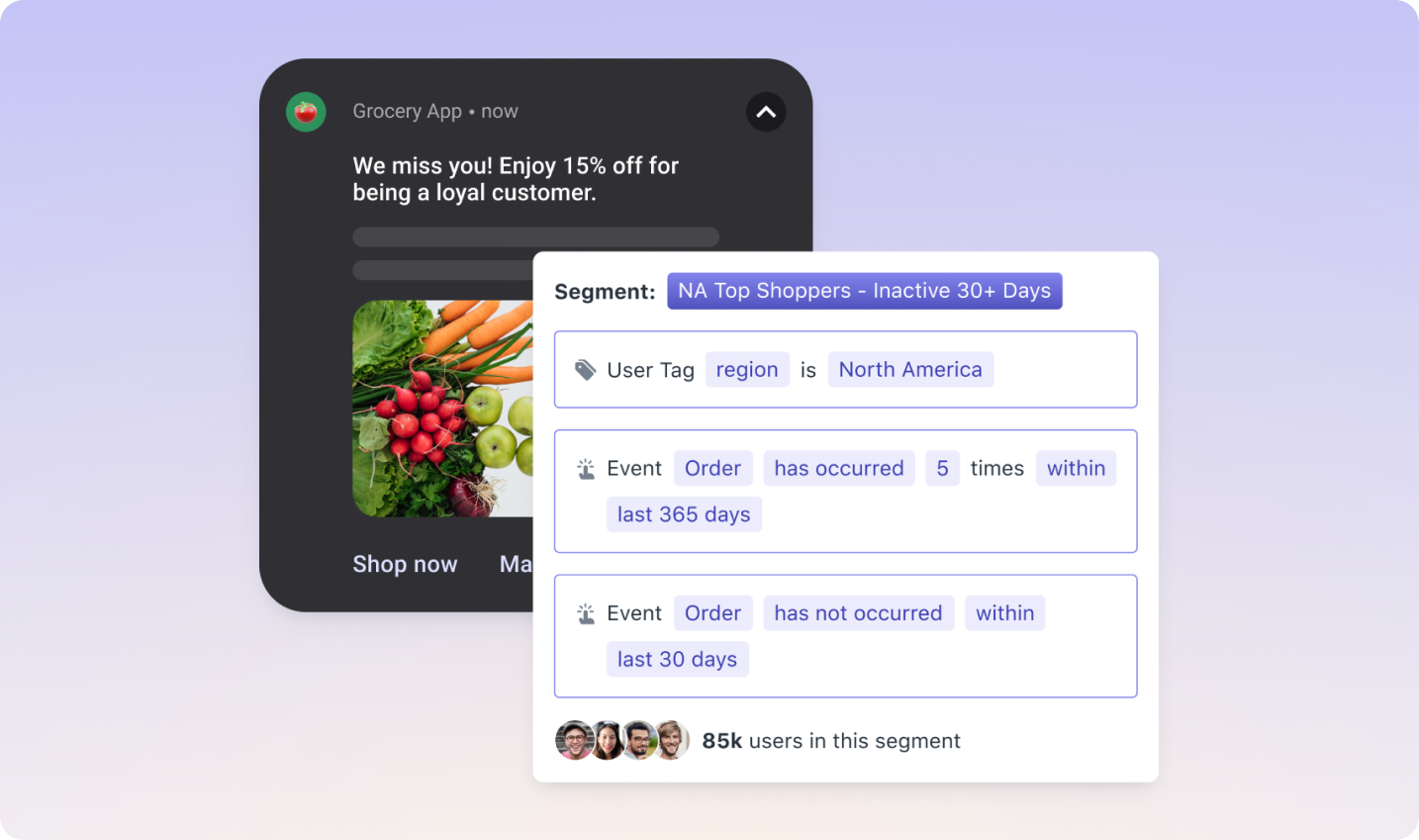
We also pushed toward “less waiting on engineering.” With OneSignal Events, marketers can bring behavioral data in and act on it—segment, trigger, orchestrate—without turning every new idea into an internal ticket queue (see: Introducing OneSignal Events).
And onboarding isn’t only about “getting your first message out.” It's to get the right message on the right channel. So, we leaned in to the power of RCS and focused on making adoption feel straightforward (see: RCS Has Entered the Chat).
Engage: Replace broadcasting with judgment
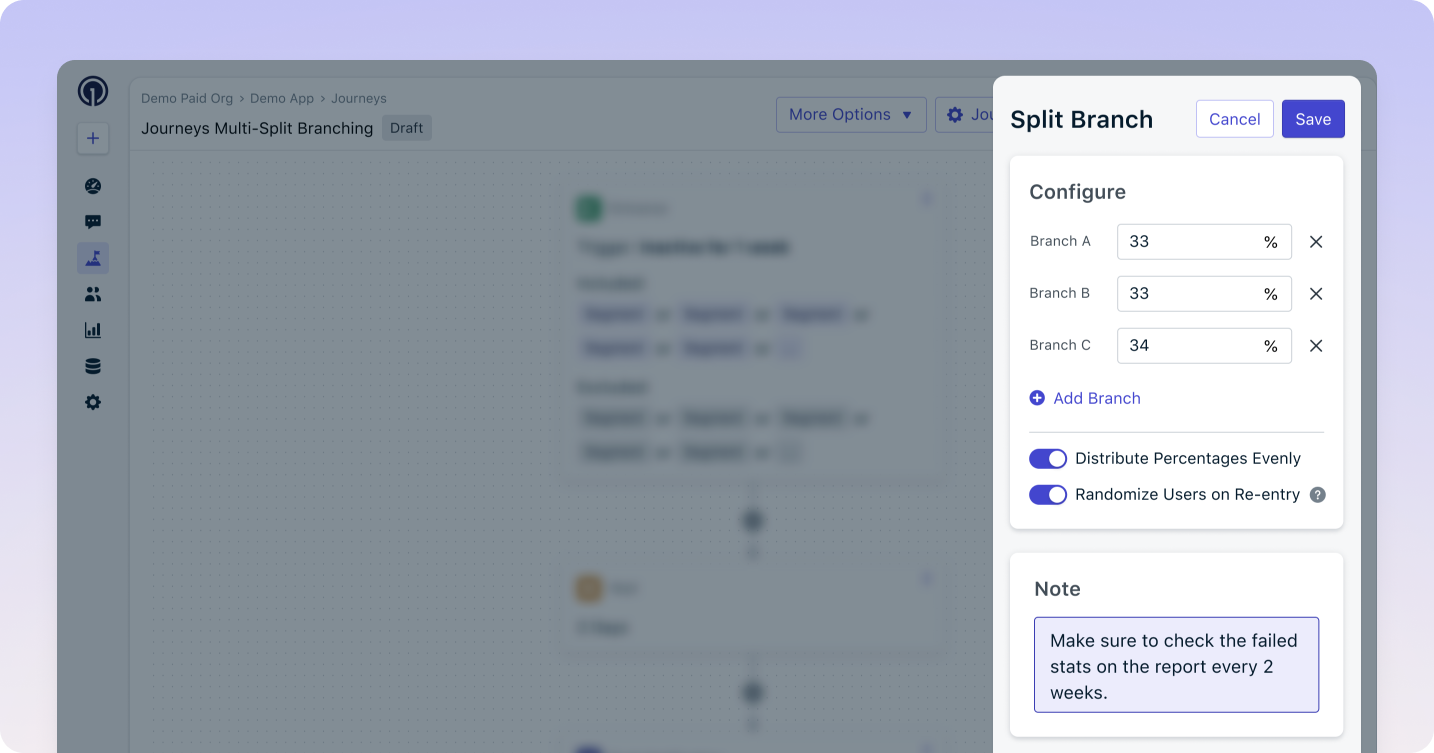
This year we made Journeys more responsive. Think less “wait three days because the flowchart says so,” and more “wait until the user actually does the thing.” Features like multi-split branching, scheduling, and collaboration notes helped teams treat Journeys like a living program, not a one-time campaign artifact (see: Building a More Powerful & Personal Journey Experience).
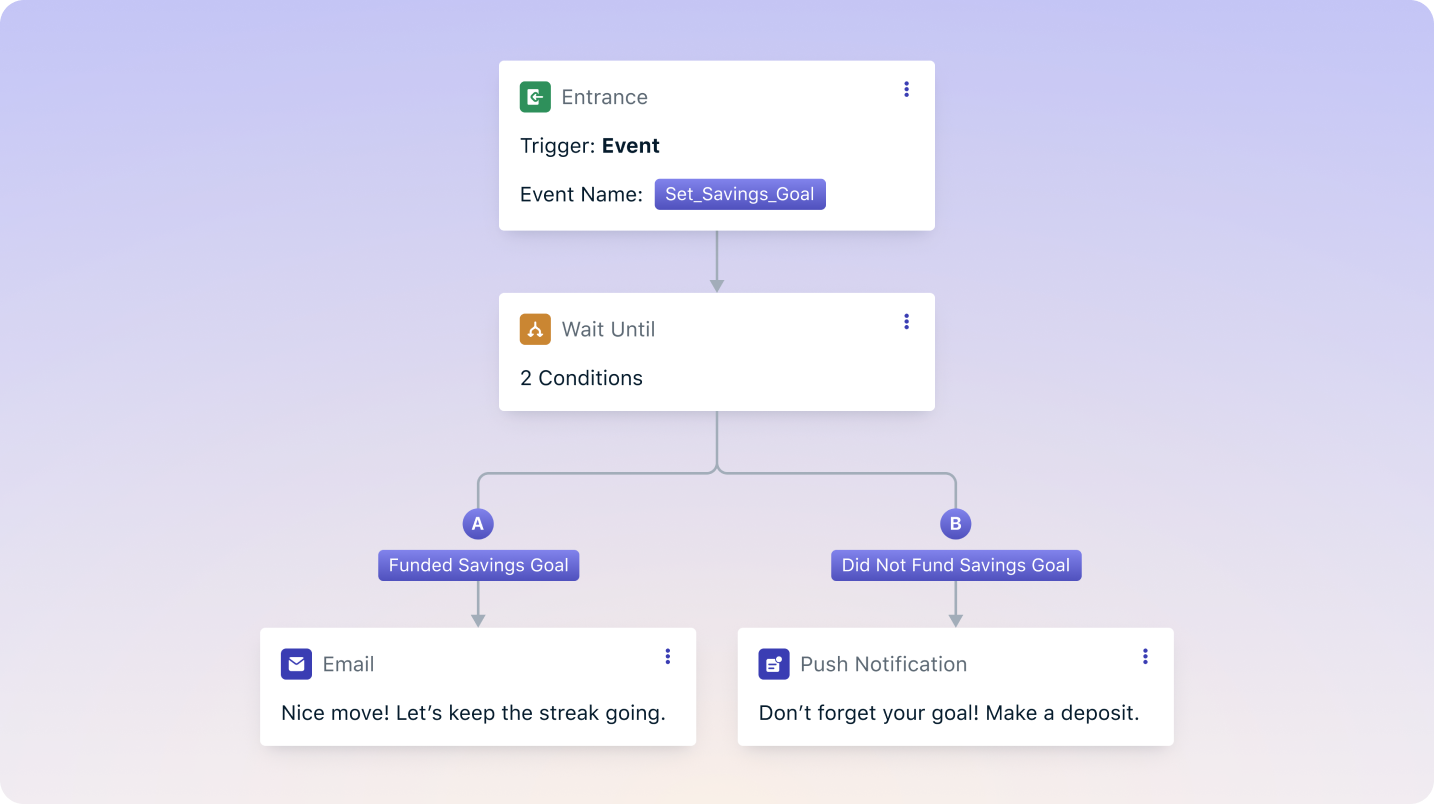
Then we took a larger step: Journeys gained a “Wait Until” action, so flows can advance on real conditions instead of arbitrary delays—because customers don’t live on your calendar, they live in their own intent (see: OneSignal Fall 2025 Release).
Across channels, we made engagement feel more alive. SMS got keyword automation for instant, relevant responses. Email got Intelligent Delivery to meet users when they’re most likely to engage—and a template library with visual previews so teams can move faster without sacrificing quality (see: What’s New: Intelligent Journeys, Smarter Messaging).
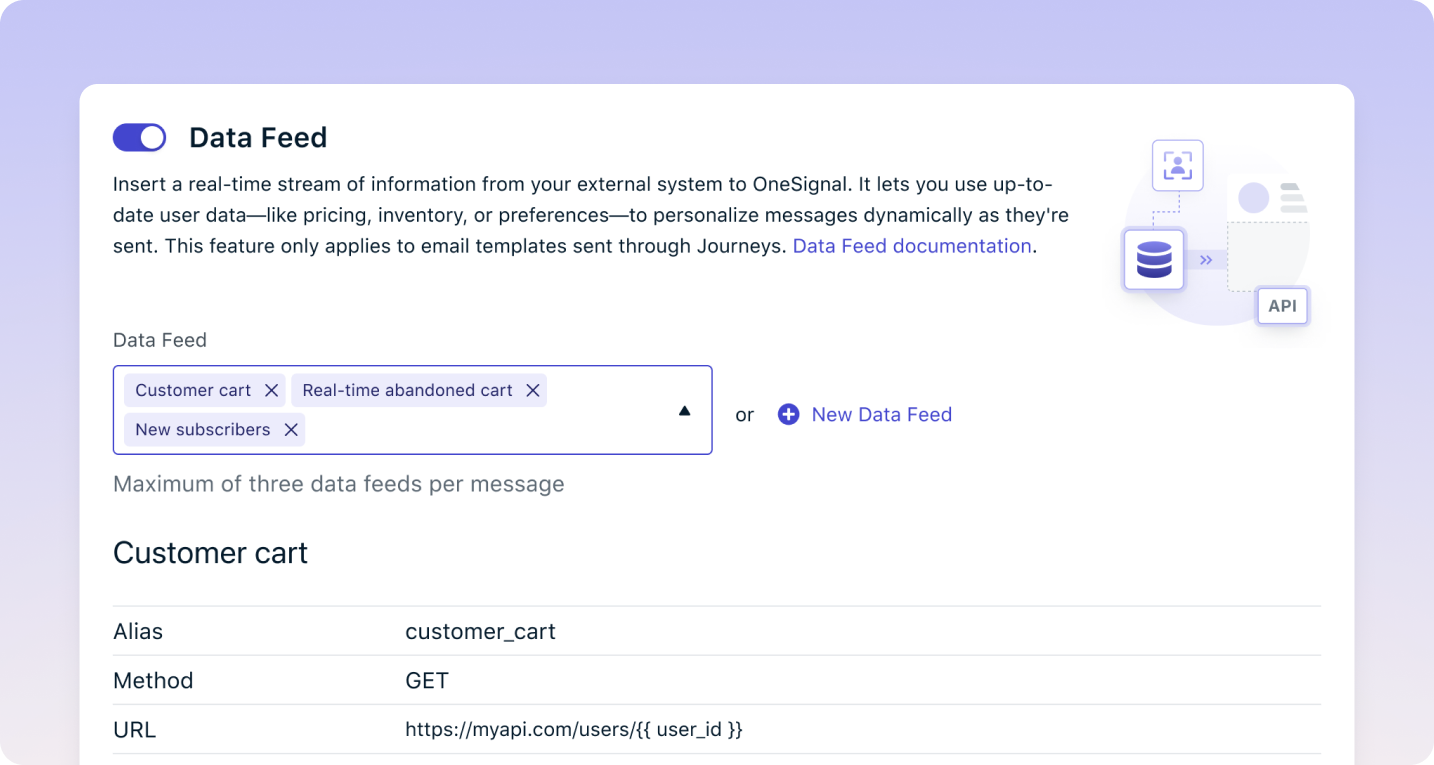
And because “personalization” is often a polite synonym for “stale data,” we shipped Data Feeds so email content can pull fresh information at send time—what’s true now, not what was true when the campaign was built (see: OneSignal Fall 2025 Release).
Retain: Build the feedback loop
Retention is the only honest metric. Everything else can be rehearsed.
So we worked on the loop that makes lifecycle programs improve. Message Event Segmentation lets teams build audiences from real message behavior—opens, clicks, bounces—so targeting can be based on evidence, not superstition (see: OneSignal Fall 2025 Release and Stop Guessing, Start Targeting).
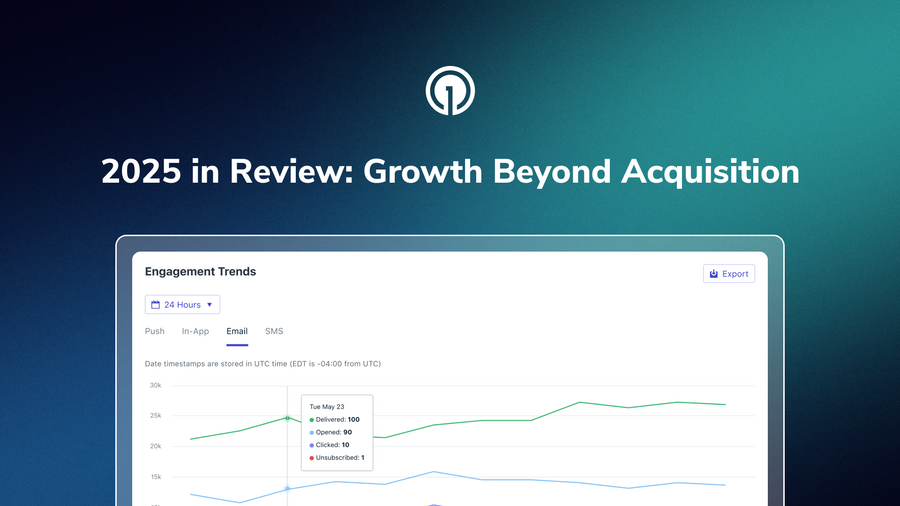
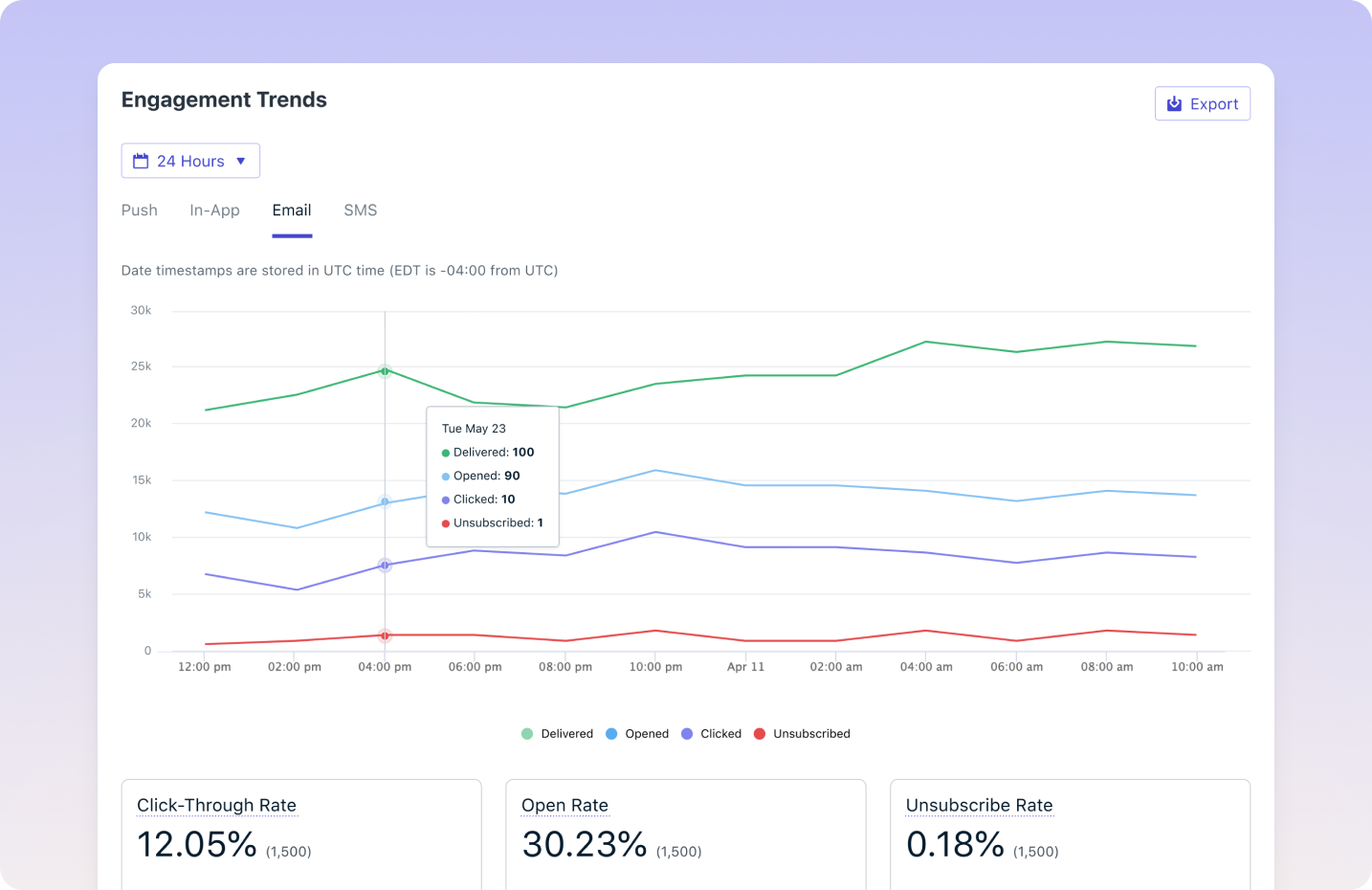
We also invested in measurement that leads to decisions. Engagement Trends brought a clearer, channel-by-channel view of performance over time (see: Engagement Trends). And analytics upgrades like template analytics and individual link analytics helped teams move past “a click rate happened” into “this is what people cared about” (see: Analytics Upgrades).
Retention is not a single feature. It is a system that keeps learning and growing.
Looking forward in 2026
The next year is about compounding what matters most.
Our product themes for 2026 sharpen into a few clear bets:
→ We will keep retention as the outcome that matters. because it is the proof that onboarding and engagement were real in the first place.
→ We will improve win rate by making OneSignal easier to understand, easier to adopt, and harder to out-evaluate—polish is not cosmetic; it’s a conversion surface.
→ We will expand through market-leading AI, but with taste: AI that removes work and advances outcomes. Not “AI for specialists,” but practical intelligence that helps teams overcome onboarding cold starts, gain engagement intelligence, and build outcome-driven campaigns. You’ve already seen early steps like AI-assisted creation and analytics guidance (see: OneSignal Fall 2025 Release).
→ And we will win the shift to modern messaging platforms, starting with RCS—not as a checkbox channel, but as a richer surface for lifecycle experiences (see: Why RCS Matters Now).
The send button will always exist. But in 2026, we’re building for what comes after it: onboard with speed, engage with judgment, retain with proof.
Get Started for Free