They bought once. They're still subscribed. Now what?
Every app has them. Users who completed a purchase, received the order confirmation text, and never came back. They didn't uninstall and they didn't unsubscribe from SMS... they simply stopped opening your app. There’s a good chance they got what they needed in a single transaction. There’s a better chance they forgot your app existed.
Either way, they're gone from your product but still sitting in your messaging list.
Most teams treat these users as either a win-back problem or a write-off. The win-back approach tries to pull them back into the app with incentives or reminders. The write-off approach stops messaging them entirely. Both miss the point!
These users gave you their phone number and haven't opted out. That's a direct line of communication that most brands would pay heavily to acquire. The question is what to do with it when the app is no longer part of the equation.
Where this problem shows up most
Some app categories are naturally prone to building large bases of app-less users. If your product fits any of these profiles, this segment is probably bigger than you think.
eCommerce and marketplace apps
A customer buys a gift during the holidays, gets the shipping confirmation via text, and has no reason to open your app again until they need something else. They might not need anything else for months.
Food delivery and on-demand services
Your user orders once during a promotion, gets the delivery updates via SMS, and goes back to their usual app. They're subscribed but not active.
Travel and booking apps
Someone books a flight or a hotel, receives the itinerary and confirmation by text, and doesn't touch your app again until the next trip. That could be six months or a year.
Healthcare and insurance apps
A patient downloads your app for a single appointment or prescription refill, gets the confirmation text, and doesn't return until the next time they need care.
What these all have in common: the transaction happened, the SMS opt-in was captured, and the user has no active reason to be inside the app. But the communication channel is still open.
What a text-only relationship actually looks like
The first thing to accept is that many of these users are never coming back to the app, and that's fine. Trying to drag them back with "We miss you!" messages or generic discount codes usually just accelerates the unsubscribe. The smarter play is to build a relationship that lives entirely in the text thread.
That means treating SMS (and RCS, which we'll get to) as a standalone channel with its own content strategy, not as a funnel back to the app. The messages you send these users should deliver value on their own, inside the conversation, without requiring the user to tap a link and open something else.
What does that look like in practice? It looks like a text from a brand that feels useful enough to not delete. Seasonal reminders tied to the user's purchase history. Restock prompts based on what they bought and how long ago. New product announcements that are relevant to their category, not a blast to everyone. Status updates on something they care about (a price drop on an item they browsed, availability for a route they've searched). Each of these messages stands on its own. The user doesn't need to open an app to get the value.
Four text campaigns that work without an app session
1. The purchase anniversary prompt.
If a user bought something seasonal or replenishable, a well-timed text at the right interval can generate a repeat purchase without any app interaction. "Last year you ordered [product] around this time. Want us to ship it again?" This works especially well for eCommerce, pet supply, and health and wellness apps where buying cycles are somewhat predictable.
The key here is behavioral personalization. The difference between a 2% conversion rate and a 10% one is usually whether the message references what you're trying to sell this week or what your customer specifically bought. If the message could have been sent to any user on your list, it's not personalized enough to work for this segment.
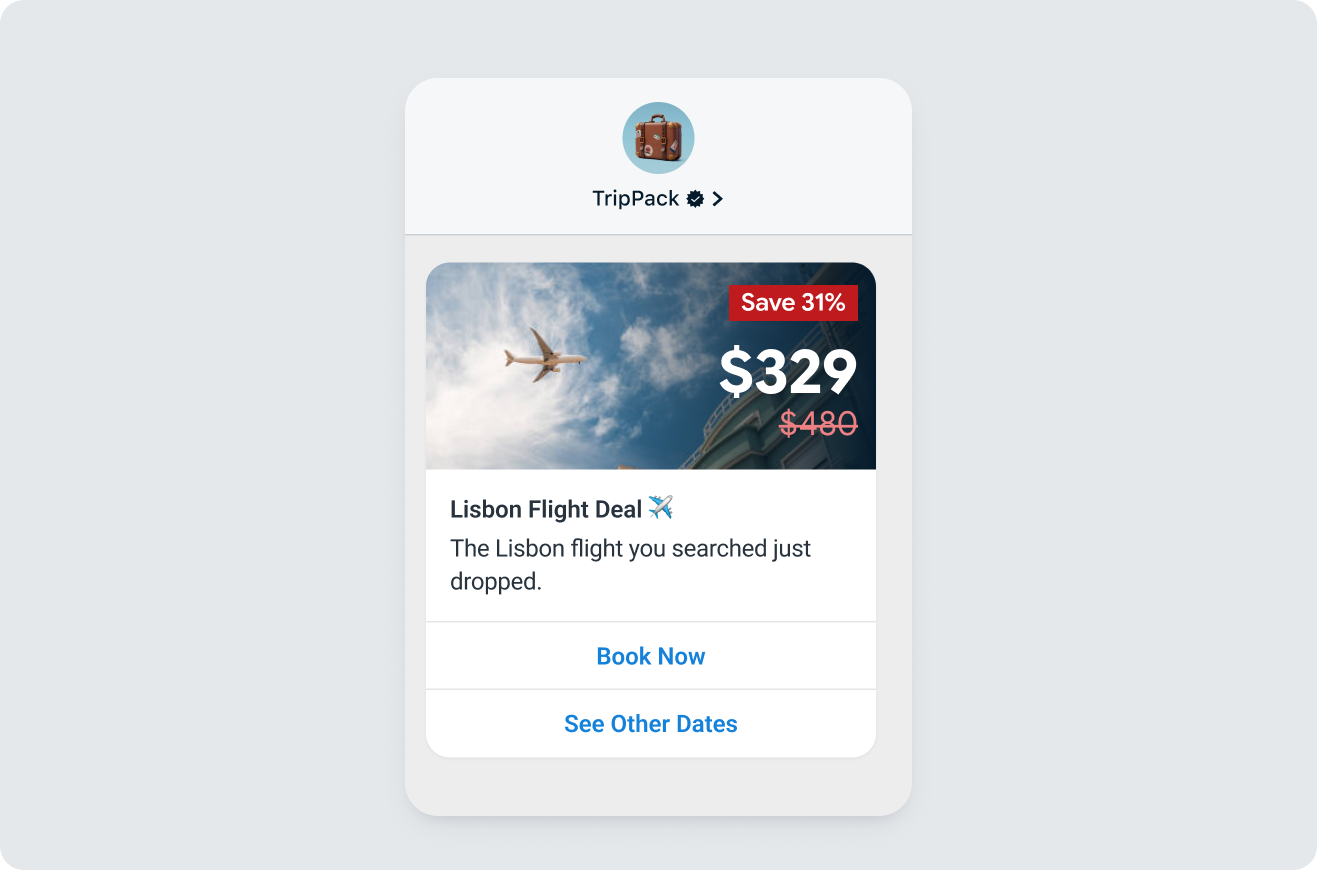
If you're lucky enough to already be taking advantage of RCS (Rich Communication Services), the message arrives with your verified brand name, logo, and checkmark at the top of the thread. For a user who hasn't interacted with your brand in months, that visual trust signal is the difference between "oh right, I did buy that from them" and "who is this and why are they texting me."
2. The relevant restock or renewal reminder.
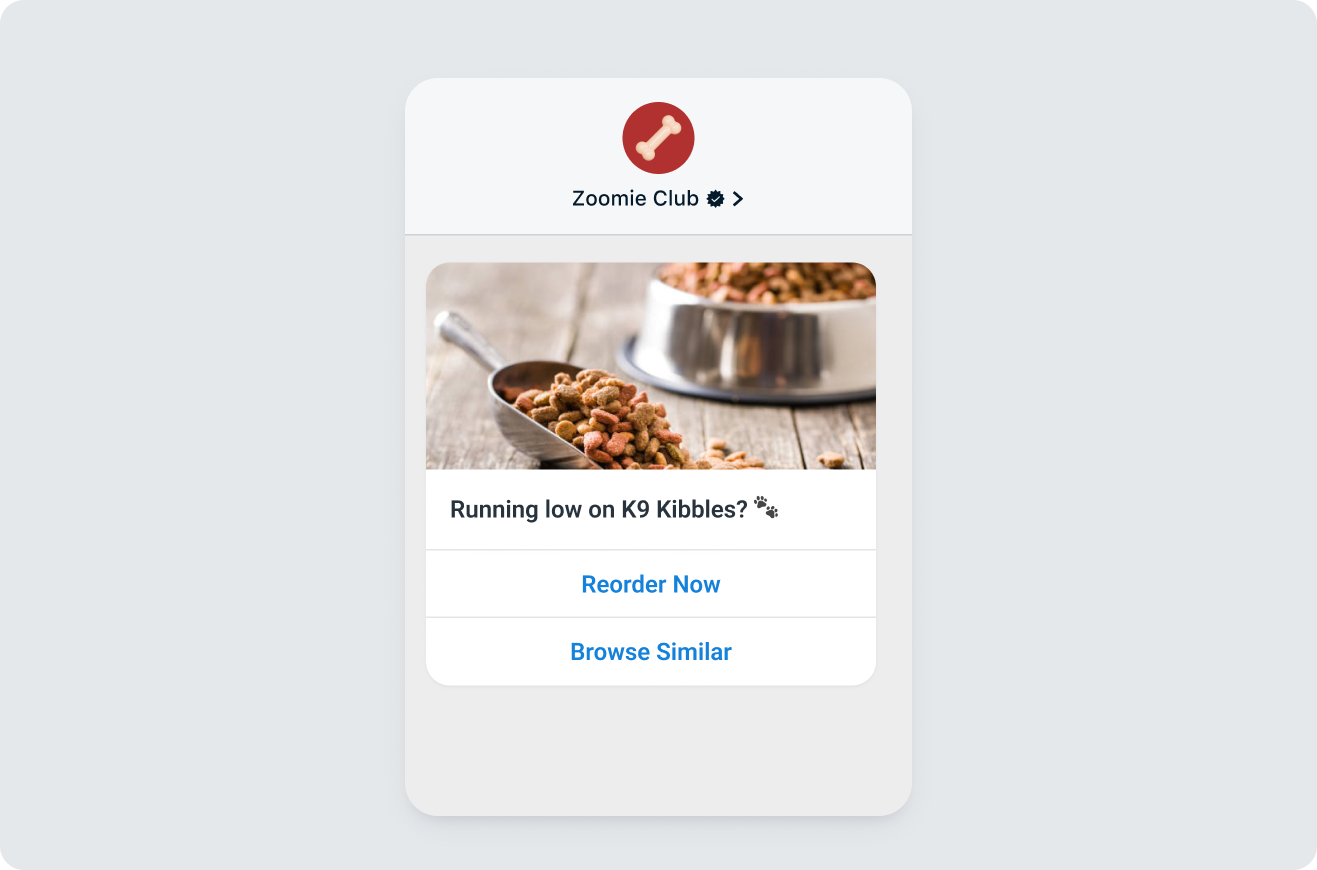
Similar to the anniversary prompt but tied to product lifecycle rather than calendar. If you sold a 90-day supply of something, a text at day 80 is useful, not annoying. Your customer doesn't need to remember when they're running low because you remember for them.
RCS turns this from a plain-text nudge into a one-tap transaction. The message can show the product, confirm the quantity and shipping address on file, and let customers complete the reorder with a single button tap, and without leaving the conversation. They don’t have to remember what they bought or go find it in your app.
3. The category-specific new arrival.
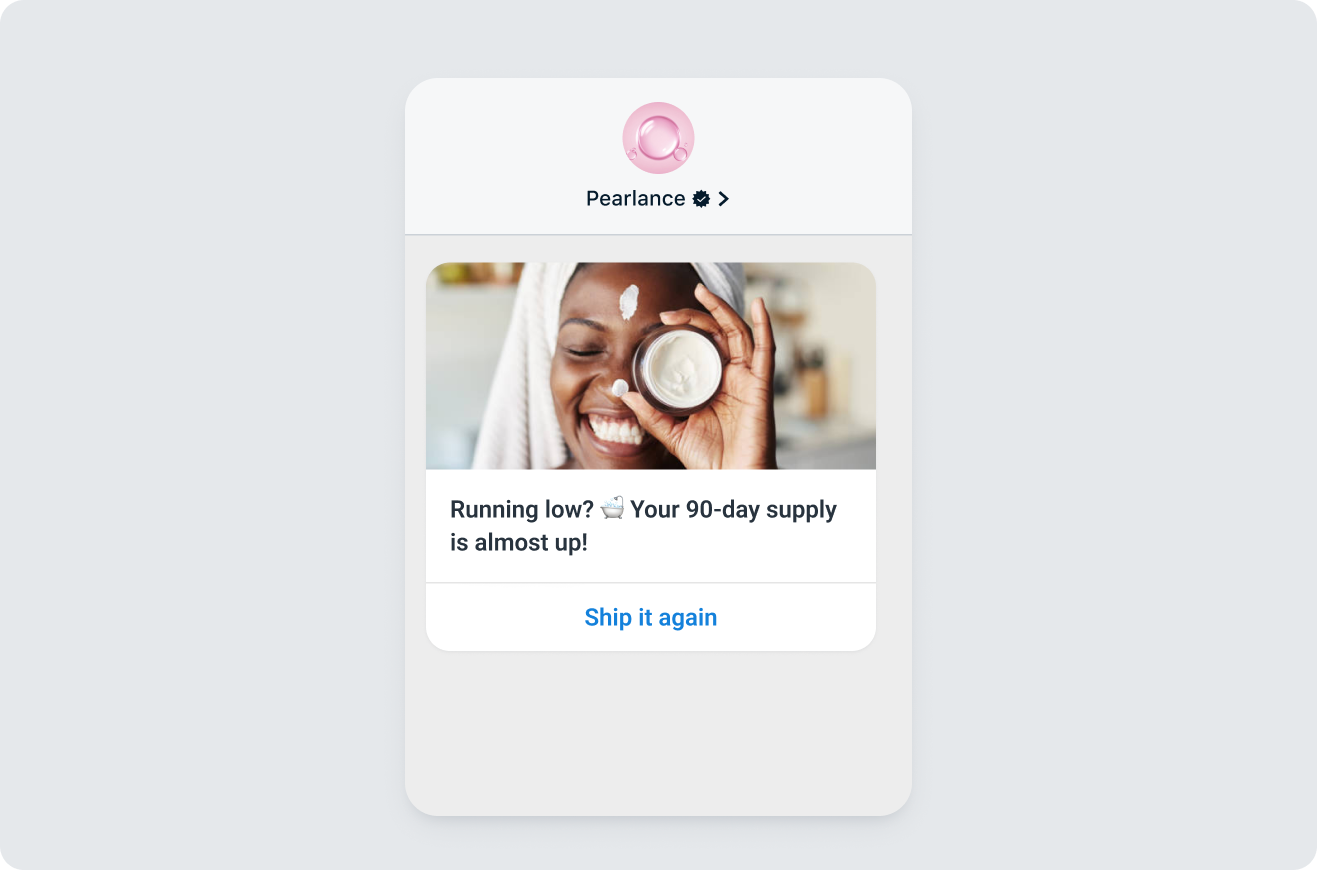
Instead of blasting your full user list with every product launch, segment by purchase history and send new arrival texts only to users who bought in the same category. A customer who bought running shoes six months ago might respond to a text about a new running shoe release. They probably won't respond to a text about kitchen appliances.
RCS makes this a browsable experience. Instead of a text with a link to a product page, you can send a horizontal carousel of three or four new arrivals in the user's category, each with an image, price, and "View Details" button. Your customers can swipe through options and tap to buy without opening a browser.
4. The price drop or availability alert.
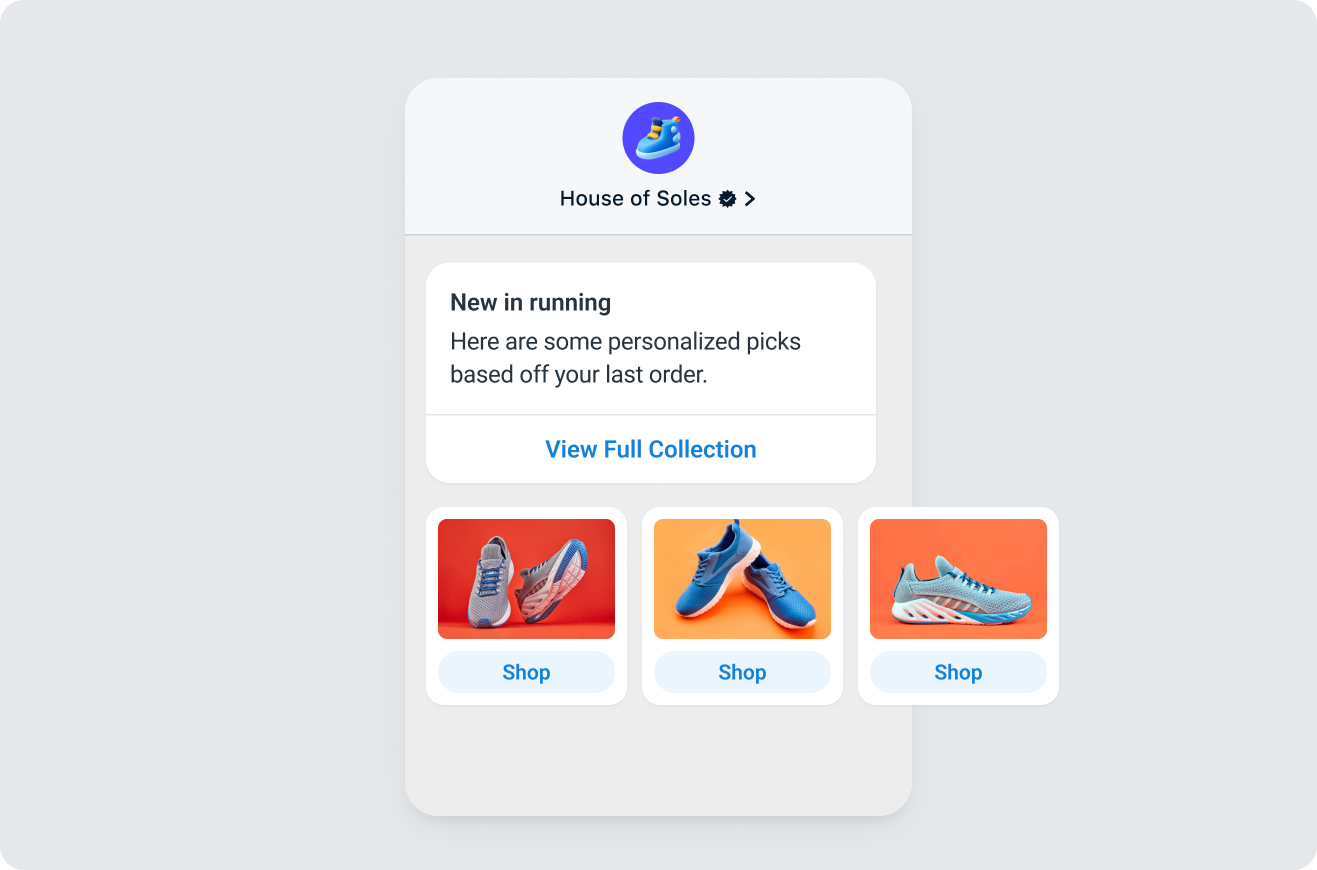
If your customers browsed a specific item or category before going dormant, a price drop or back-in-stock alert feels like a favor rather than marketing. "That flight from JFK to Lisbon you searched in March just dropped 30%." This requires connecting browsing data to your messaging platform, but it's one of the highest-converting text campaigns you can run for inactive users.
With RCS, the alert includes the specifics: a rich card showing the item, the original price crossed out next to the new price, and a "Book Now" or "Add to Cart" button. It feels more like a a personal price tracker that just happened to find a deal for you.
RCS bridges the gap between text and app
Everything above works with standard SMS. But SMS also has real limitations for this use case. You're restricted to plain text and a shortened URL, which means any action the user wants to take requires tapping a link and loading a browser or app. For users who are already disengaged from your app, that extra step is often where the conversion dies. It’s a serious challenge, and one that we’re seeing more and more marketers start to have the SMS vs. RCS conversation around.
RCS changes the math. With RCS messaging, you can send rich cards with product images, prices, and one-tap action buttons directly inside the text thread.
RCS messaging support is now available across both major mobile platforms, and any modern messaging platform handles the fallback to SMS automatically for devices that don't support it yet.
For a deeper look at where RCS stands and whether the upgrade makes sense for your team, see our realistic assessment of RCS in 2026.
OneSignal: The platform behind the strategy
Building text campaigns for users who don't open your app requires a platform that can segment by purchase behavior and engagement recency, trigger messages based on time intervals and behavioral events, and deliver across SMS and RCS with automatic fallback. OneSignal does all of this from a single dashboard, alongside push, email, and in-app messaging.
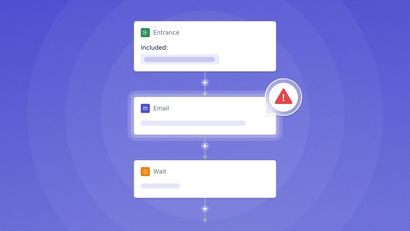
Our Journeys builder lets you automate the campaigns described above with branching logic that adapts based on whether a user engages or stays dormant. Custom events and user tags give you the data layer to segment by purchase history, product category, and engagement recency.
And because SMS and RCS run through the same system as your other channels, you're not managing a separate tool for your text-only users.
Your app-less users are still reachable. Don't miss out on them.
See RCS in action