AWS is ending support for Amazon Pinpoint on October 30, 2026. This includes the entire console and everything in it: endpoints, segments, campaigns, journeys, and analytics. Pinpoint stopped accepting new customers back in May 2025, so if you're still on it, you've been on borrowed time for a while without necessarily knowing the clock had a date on it.
The kicker is that AWS's own migration guide doesn't point you to a single replacement. It points you to four, depending on what you used Pinpoint for.
Where AWS actually sends you
Straight from AWS's migration documentation, a Pinpoint customer gets split four ways:
- Engagement (segments, campaigns, journeys) moves to Amazon Connect's outbound campaigns and Customer Profiles.
- Events and mobile analytics move to Amazon Kinesis.
- Email moves to Amazon SES.
- SMS, push, voice, and OTP move to AWS End User Messaging, which is actually just Pinpoint's old channel APIs under a name AWS already switched to back in 2024.
It's still one vendor, but now it's four separate products, four consoles, and four sets of documentation standing in for the one system you had. For teams without a dedicated platform engineering group, that's a heavier lift than "migrate to a new tool" usually implies.
What mobile-focused teams need to read twice
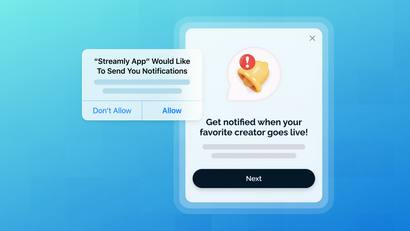
Amazon Connect, the recommended destination for Pinpoint's engagement features, doesn't natively support in-app messaging at all. Push notifications aren't a built-in campaign channel either, AWS's own guide says you'll need to route them through a journey using a Lambda function and custom push templates just to replicate what Pinpoint did out of the box.
If your team runs a mobile app, that's potentially a costly roadblock especially if your developer resources are tight. In-app messaging and native push are probably two of the main reasons you were on Pinpoint in the first place, and the recommended migration path doesn't carry them over cleanly.
Skip the four-way split entirely
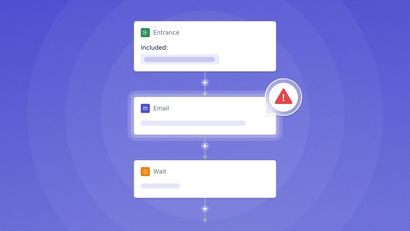
OneSignal covers that entire list as one platform: Journeys for the visual campaign and automation builder, native segmentation, mobile push, web push, in-app, email, and SMS/RCS with a unified data model all in one console instead of four. It also means adding a new channel or segment down the line is one build, not four, so audience engagement doesn't get harder to maintain every time your program grows.
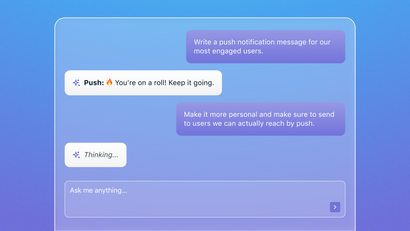
OneSignal AI and MCP Server also help with the actual migration work: describe the segments and journey logic you're rebuilding in plain language and get a working draft to react to, instead of manually recreating everything from Pinpoint's exported JSON by hand.
A practical migration checklist from Amazon Pinpoint
- Export your Pinpoint endpoints, segments, campaigns, and journey definitions using AWS's own APIs before anything gets harder to retrieve.
- Map your Pinpoint custom events and endpoint attributes to OneSignal's segmentation and data tag model.
- Rebuild your Journeys, this is where AI-assisted drafting saves real time, since you're recreating known logic, not designing from scratch.
- Re-point your mobile SDKs and confirm event ingestion is flowing before you cut over.
- Run a pilot send to a small segment and confirm parity before moving full volume.
- Account for real calendar time on sending domain authentication and SMS/RCS sender registration, none of that speeds up just because Pinpoint's deadline is close.
Get a migration plan built around your actual deadline
With a hard October 30 deadline and real production volume riding on it, it's worth talking to our team directly about a migration plan sized to your actual MAU and timeline, rather than provisioning something on your own and finding the gaps three weeks before Pinpoint shuts off.
That conversation can also work through the specifics from the checklist above, event mapping, journey rebuilding, SDK cutover, so the plan matches your actual Pinpoint setup instead of a generic migration.
Get in Touch