SMS still works. It's reliable, universal, and deeply embedded in the lifecycle playbooks of nearly every mobile team today. But the world around SMS has changed dramatically the last few years, and the gap between what a text message can do and what your customers have come to expect is widening fast.
Your customers have been trained by apps to expect richer, more interactive experiences everywhere they look. They browse carousels on Instagram, tap through stories, and complete purchases without ever leaving a conversation thread. Then they open their SMS inbox and find a wall of plain-text messages from unknown short codes. The contrast is jarring, and it teaches them to ignore what doesn't look like it belongs.
Lights. Camera. Conversation.
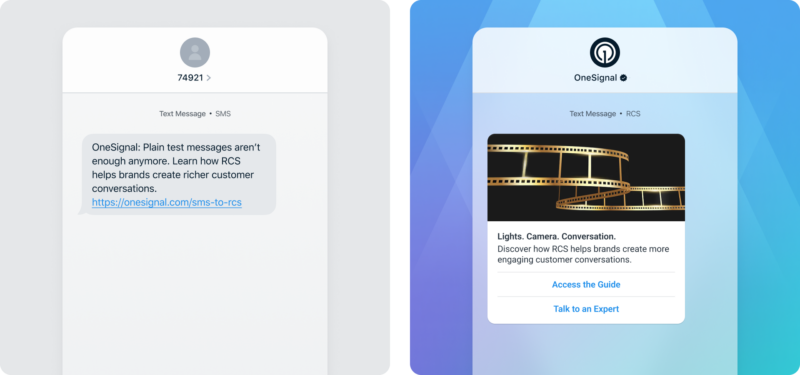
RCS messaging brings a trusted, app-like experience to your customers’ text threads. No app download required, no new channel to explain to your customers, and all with your verified brand front and center.
Below, we’ve put together six of your most common messaging moments, and compared what each looks like as SMS today and as RCS tomorrow.
What RCS is (and what RCS isn’t)
RCS (Rich Communication Services) is the modern successor to SMS and MMS. It brings richer media, a branded sender identity, and interactive, app-like messaging experiences directly into your users’ default inbox. It lives where your texts already live, it just does far more heavy lifting.
Actions speak louder than words. RCS sends both.
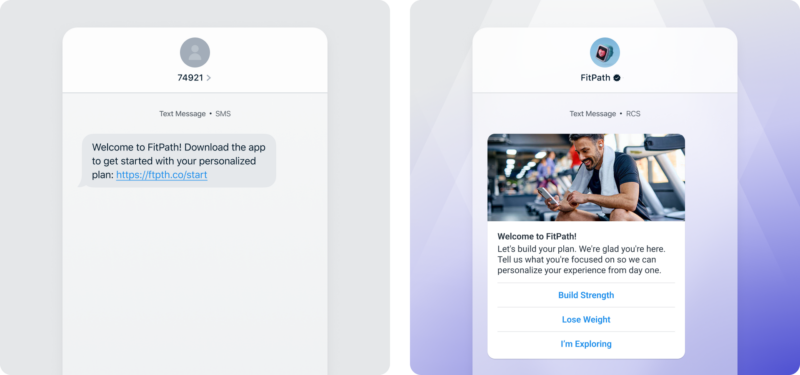
Most onboarding sequences over SMS follow the same pattern: a welcome text with a link to download or open the app, maybe followed by a second message a day or two later nudging the user to complete setup. But there’s no rule that says functional must mean forgettable.
The first 72 hours after signup are when intent is highest and attention is most available. This is the window where you either earn a habit or lose a user. RCS lets you make this moment feel like opening a personalized welcome experience rather than a disposal text from a number they don't recognize.
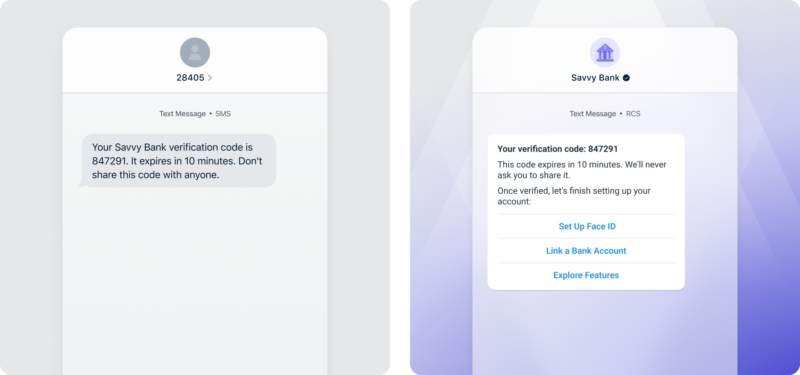
Account verification is one of the most common SMS use cases and one of the least considered. The typical flow is a one-time passcode sent from an unfamiliar number, consumed in seconds, and immediately forgotten. It does the job, but it's also a missed opportunity, especially in categories like fintech where trust is everything.
The irony of verification messages is that they're security-focused, yet they often look exactly like phishing attempts: an unknown number, a random code, no context for why it was sent. RCS flips this by making the verification message itself feel secure and branded.
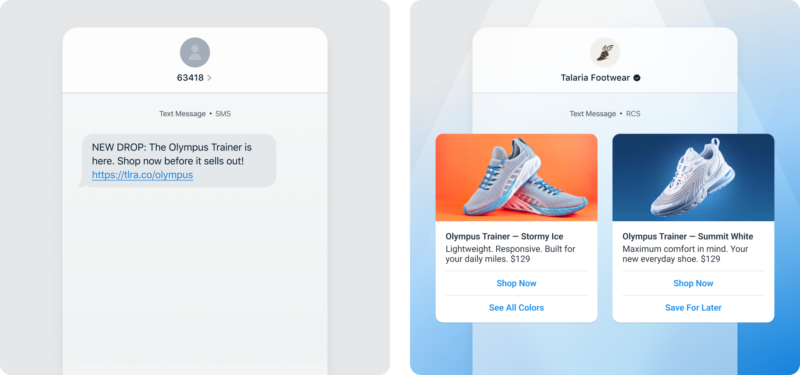
Promotional SMS is the workhorse of most text marketing programs. A new collection drops, a flash sale goes live, a seasonal campaign kicks off, and the team sends a blast with a shortened URL and some FOMO-fueled copy. It works well enough, but it asks the user to do a lot: read the text, click the link, wait for the page to load, find the product, and then decide to buy. Every step is a potential drop-off.
RCS collapses that journey. Instead of describing a product in 160 characters and hoping someone taps, you can show it to them, let them browse options, and give them a direct path to purchase, all without leaving the message thread.
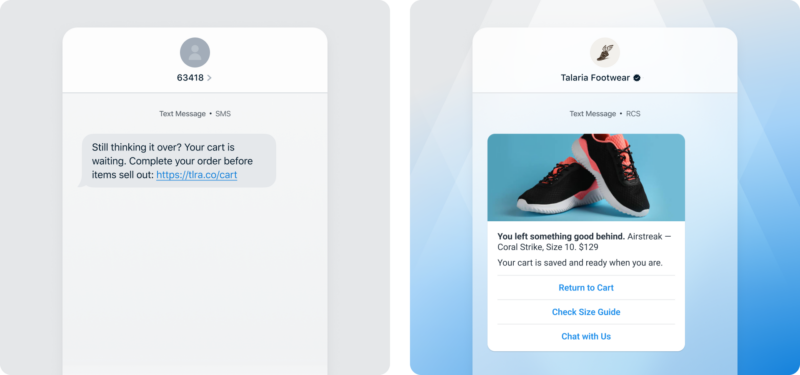
Cart abandonment recovery is one of the highest-ROI automated messages most brands send, and also one where the gap between SMS and RCS is most obvious. The standard SMS approach is a text reminding the user they left something behind, paired with a link back to their cart. It works, but it relies entirely on the user's memory of what they were shopping for and their willingness to click a link from an unknown number.
RCS closes the gap between reminder and action by showing the user exactly what they left behind and giving them a way to pick up right where they stopped.
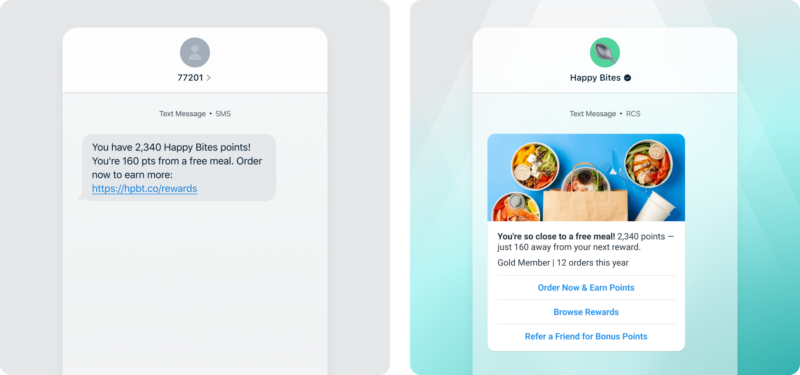
Loyalty and rewards messages might be the most underperforming category in text marketing. The typical SMS is a balance update or a generic reminder to redeem points, sent from an unknown number, and almost always ignored. It's the messaging equivalent of junk mail: technically valuable, practically invisible.
This is a category where RCS can turn one of the most forgettable touchpoints into something that actually drives engagement. The key is making the user's rewards status feel tangible and actionable, not just informational.
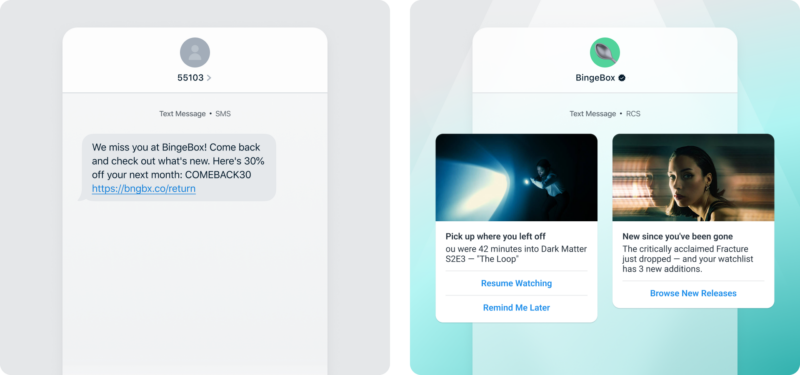
Win-back messages are some of the hardest to get right in any channel. Your lapsed users have already disengaged and they haven't opened your app in weeks.
Instead of relying on the vague emotional appeal of a push notification or competing in the crowded email inbox arena, you can show lapsed users exactly what they're missing, make it personal, and give them a low-friction way to come back.
One rich message > A hundred plain ones
If you've made it this far, you probably have a few messages in mind that deserve the upgrade. Here's how to take a first step.
The RCS application process
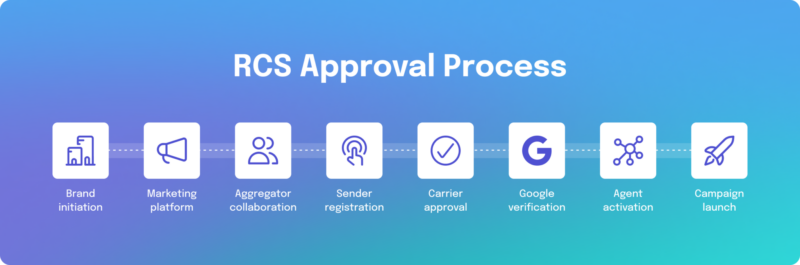
RCS isn't something you flip on overnight. Brands typically launch through an RCS partner or aggregator, where your "agent" (the branded sender profile your customers see) is verified and reviewed for compliance. The process generally involves brand verification, aggregator collaboration, carrier approval, and Google verification before your agent goes live.
The fastest path to approval: come prepared with clean brand assets, a clear consent story, and a small set of representative message journeys that demonstrate usefulness, not spam. Many customer engagement platforms, including OneSignal, can help you package what's required and guide you through the process.
Ready to bring app-like messaging to your inbox?
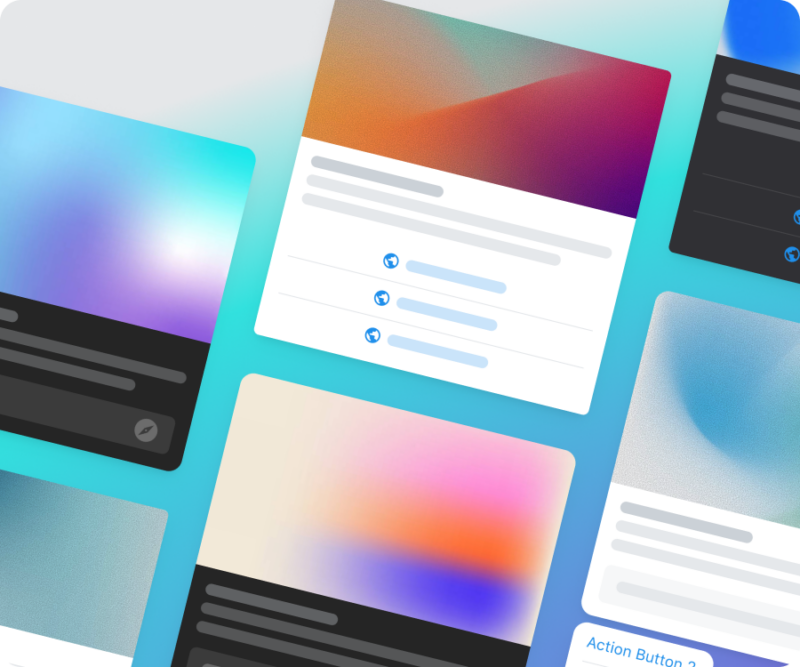
You don't need to upgrade every message. Start with the ones that matter most: the welcome sequence that sets the tone, the cart recovery that closes the sale, the loyalty update that drives the next order. Use the framework in this guide to identify your highest-impact candidates, prototype the experience with our free RCS Figma kit, and take the first step.
Get the RCS design kit