For the mobile team who wants to build relationships their users won’t outgrow.
Before we start cooking…
Every mobile team wants the same thing: users who stay long enough to justify what it costs to acquire them, and then become the reason your growth actually compounds.
Getting there takes more than generic re-engagement campaigns and win-back flows. Your messaging sequences should build habits before users start to slip, while protecting your direct channel access before AI filters you out. It’s a tall order, so we’ve put this together to makes things a little more digestible.
Below are six behavior-based re-engagement flows, each built around a retention problem you'll recognize. We’ve included channel-by-channel logic specific enough to build from and flexible enough to make your own.
Bon appétit.
Look for the 🛡️ marker throughout the guide. It flags recipes and tactics that are especially resilient to AI-mediated filtering. These are strategies that work even when a notification summary, smart inbox, or
AI assistant is standing between you and your user.
Recipe #1
"Our users love our product...but forget we exist."
If this sounds familiar...
Your readers engage deeply when they visit. They’re reading multiple articles, saving stories, and spending real time in your app. But they don't come back consistently. They'll binge on a Monday, disappear for two weeks, then resurface when a headline catches their eye on social media.
...try this
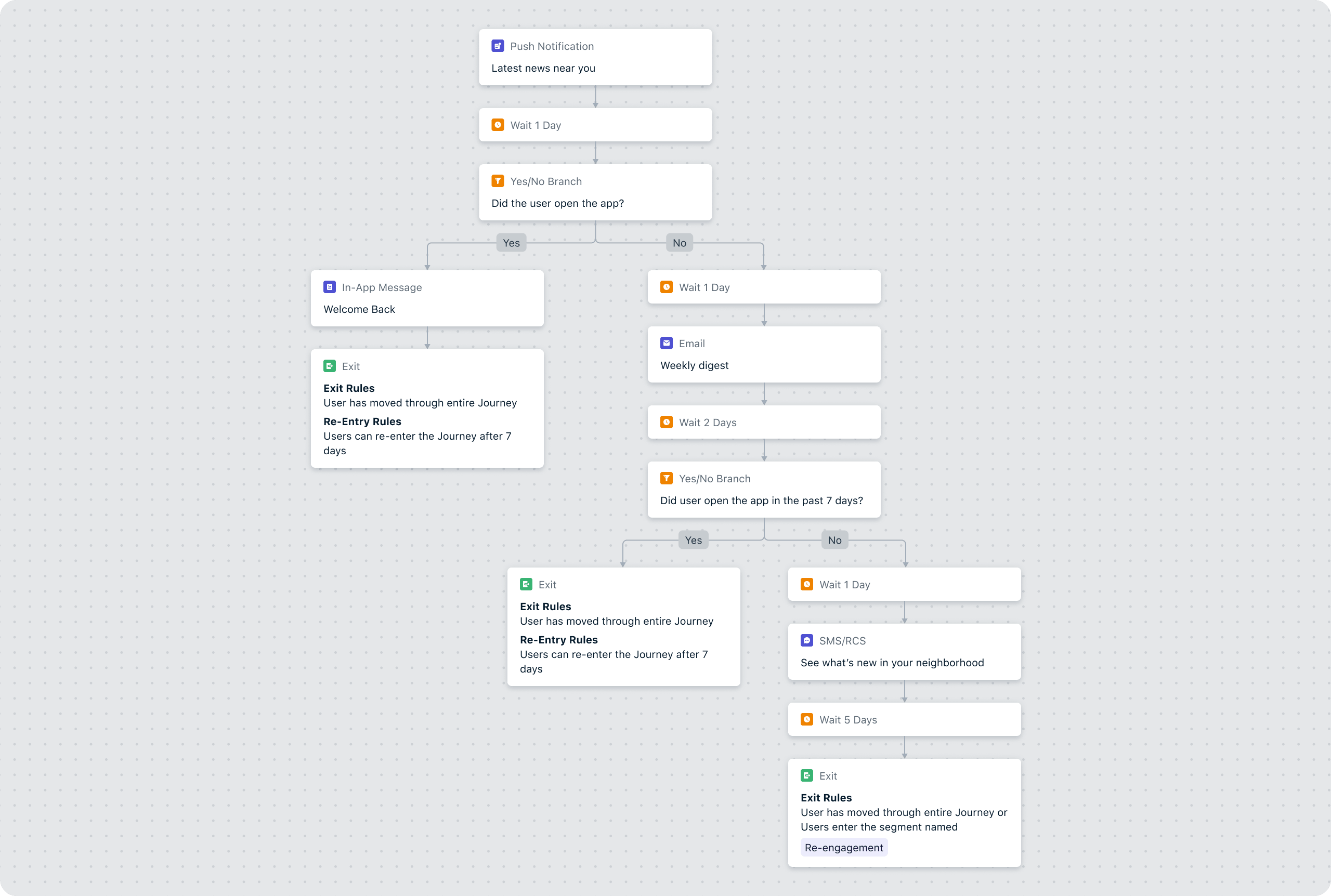
News and media apps live and die by daily active usage, but most rely on breaking news to drive it. When there's no major story, traffic dips because users don't have a routine reason to open the app. Focus on building a personalized content rhythm that becomes part of their day, the way a morning podcast or newsletter does.
The Recipe: Weekly Value Cadence Journey
Vertical: News/Media Channels Used: Push, In-App Message, Email, RCS/SMS Entry Trigger: Reader has consumed 3+ articles in the past 14 days AND has not opened the app in the last 4 days.
Exit Conditions:
Reader returns at any branch → Journey resets to weekly cycle
Reader remains inactive after full sequence → Exits to re-engagement segment (Recipe 6)
Reader unsubscribes from any channel → Removed, preferences updated
🛡️ Why this is AI-resilient:
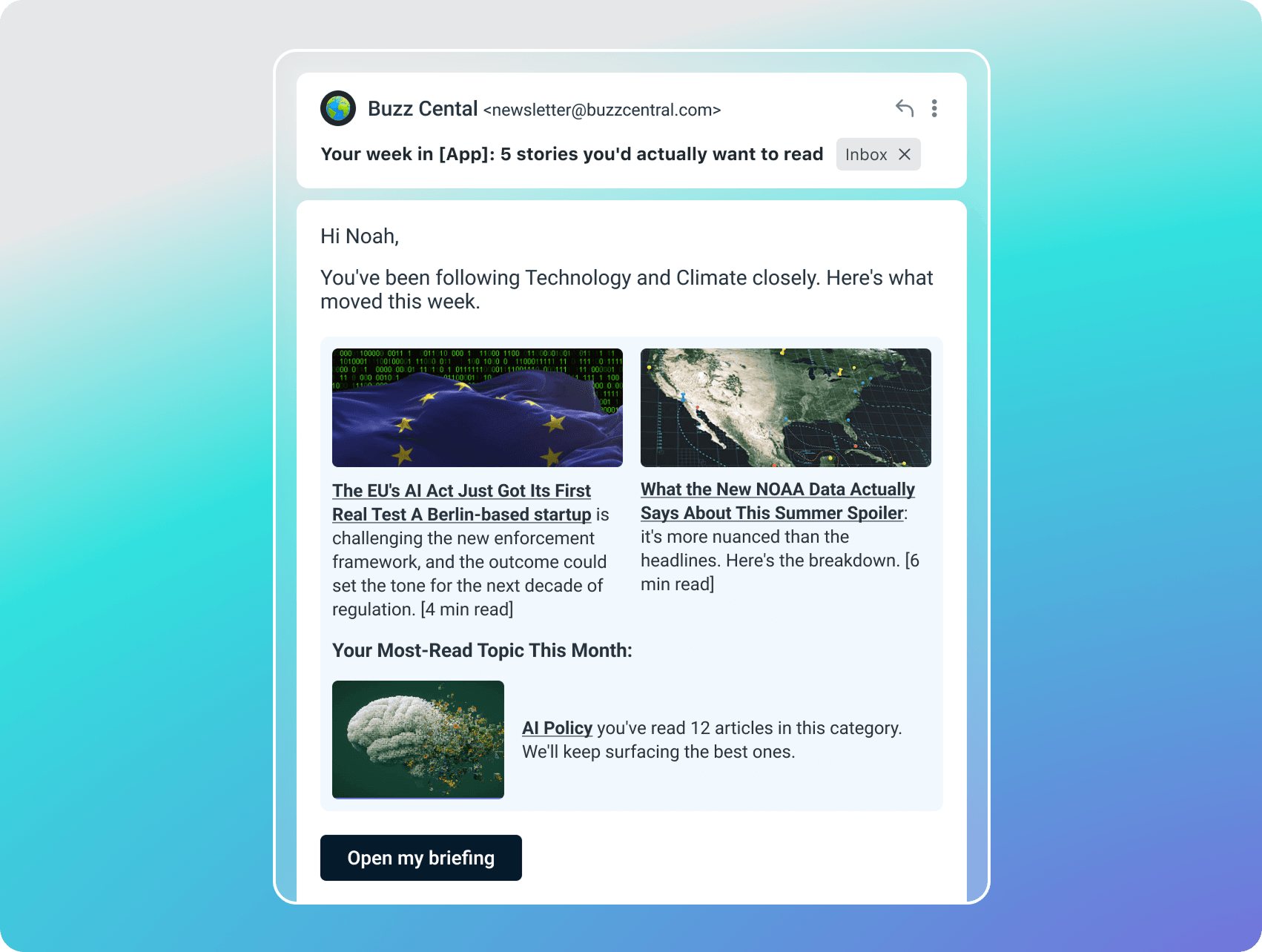
Messages that reference a reader's own behavior and topic interests are the least likely to be collapsed by notification summaries. An AI summary reading "Your weekly briefing from [App] — 5 stories in Technology and Climate" carries personal significance. A generic "Top stories this week" does not.
Recipe #2
"We're acquiring well, but our D30 retention is terrible."
If this sounds familiar...
Your install numbers are strong. UA campaigns are converting, the app store listing is doing its job, and Day 1 retention looks healthy. But by Day 30, more than half of those players have dropped off. Your onboarding tutorial exists, but it's not translating into the kind of early momentum that makes someone stick around.
...try this
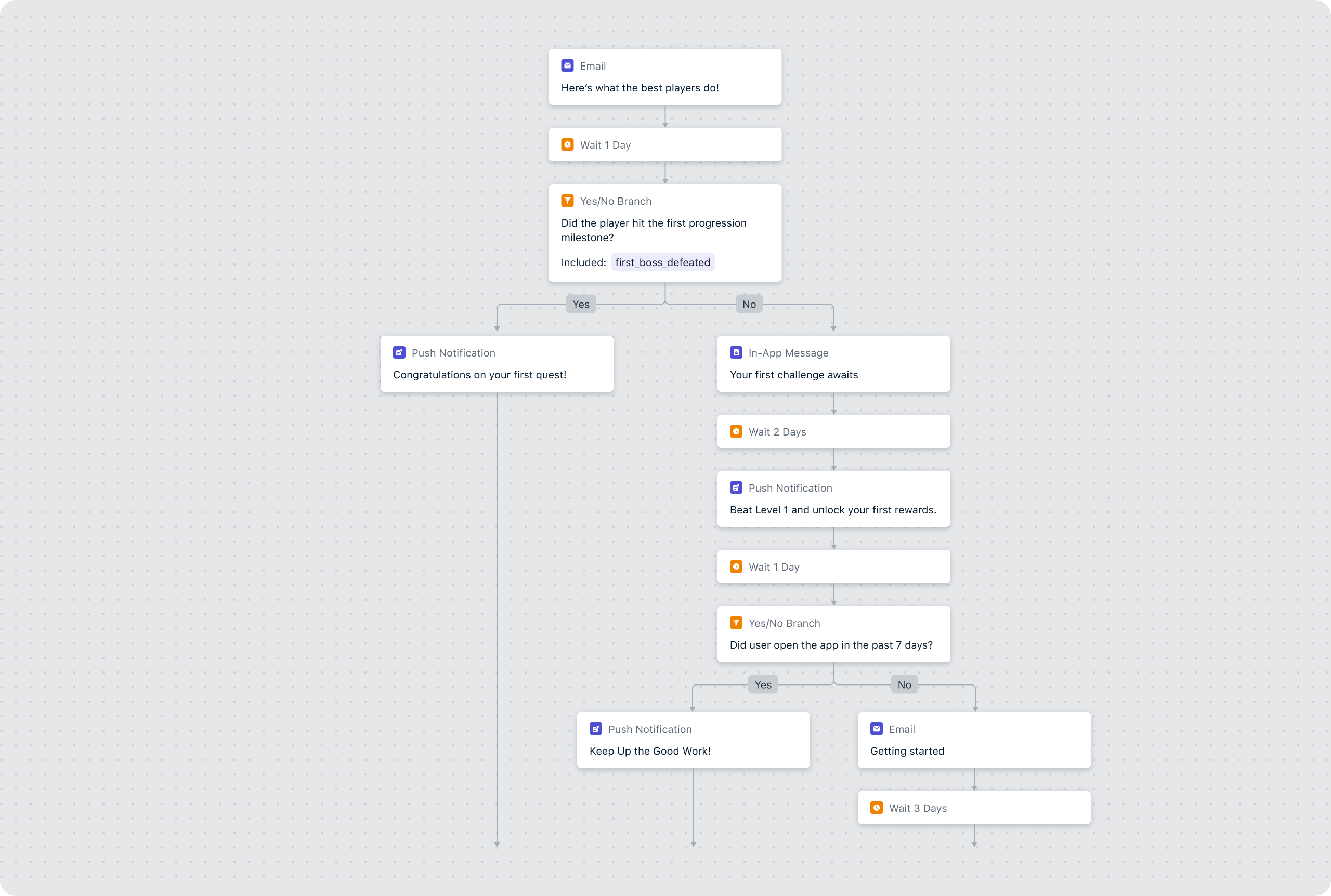
Most gaming onboarding focuses on teaching mechanics… “how to play.” But the players you're losing already know how to play. What they haven't experienced is the hook that makes them want to keep playing. Maybe they haven't hit the first meaningful progression milestone, discovered the social features, or built enough invested progress to feel like walking away costs them something.
The Recipe: First 14-Day Habit-Building Journey
Vertical: Gaming Channels Used: Email, Push, In-App Message, RCS Entry Trigger: Player completes the tutorial or first session (custom event: tutorial_complete or first_session_end).
Exit Conditions:
Player reaches 3+ sessions in 7 days → Graduates to ongoing engagement flows
Player fails to hit first milestone after full sequence → Low-intent nurture
Player unsubscribes → Removed, preferences updated
Recipe #3
"Our users are opting out of our channels faster than we can grow them."
If this sounds familiar...
Your subscriber list is growing, but your reachable audience isn't keeping pace. Push opt-outs climb after every flash sale. Email unsubscribes tick up each month. You're adding contacts at the top and losing permission at the bottom, and the net effect is a shrinking audience.
For eCommerce brands especially, this is a compounding problem. Every channel you lose access to is one less shot at the next purchase.
...try this
eCommerce messaging volume is the highest of any vertical, which means fatigue hits faster. Customers don't unsubscribe because they dislike your brand, they unsubscribe because the value of staying subscribed (occasional relevant deal) no longer outweighs the cost (daily noise).
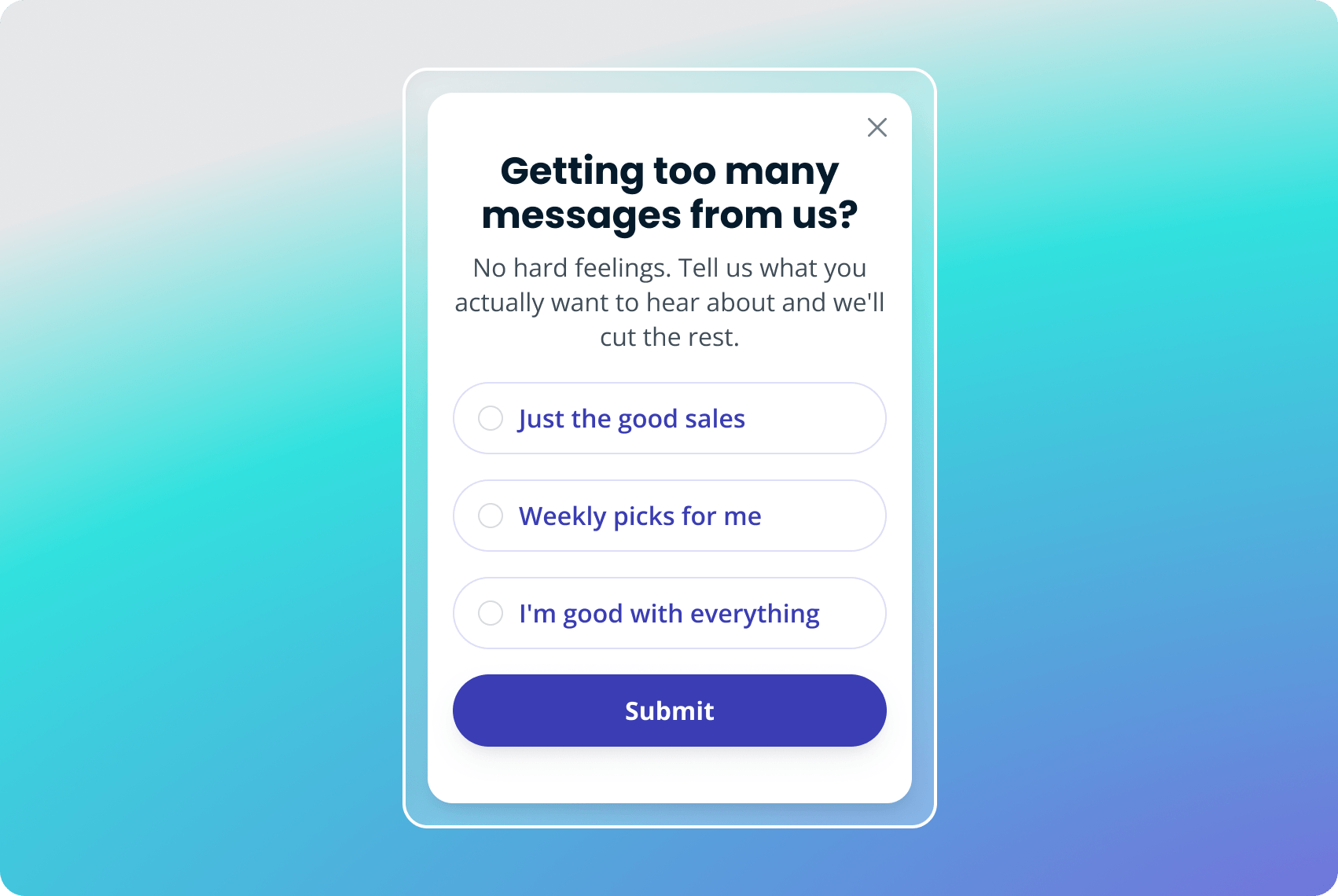
Give them control over what they receive. Users who actively choose their preferences are dramatically more likely to stay opted in and more likely to have their messages surfaced by AI-powered inbox filters.
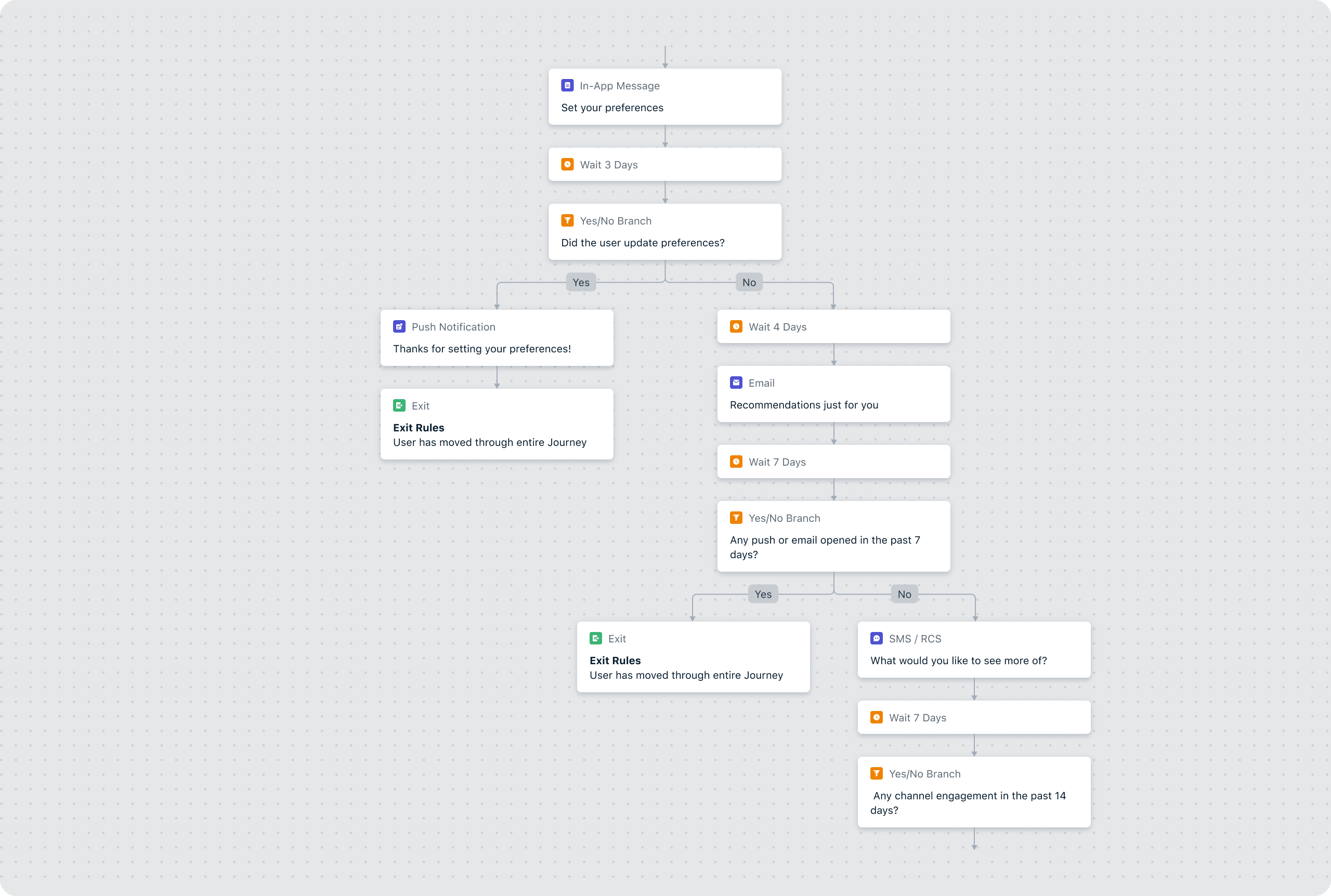
The Recipe: Channel Preservation Journey
Vertical: eCommerce Channels Used: In-App Message, Push, Email, RCS/SMS Entry Trigger: Customer has not opened a push notification in 14 days AND has not opened the last 3 emails, but has visited the site/app at least once in the past 10 days. (Still shopping, just ignoring your messages.)
Exit Conditions:
Customer updates preferences → Exits to standard flows with new settings
Customer re-engages with any channel → Returns to regular rotation
Customer remains unresponsive → Suppressed from promotional sends (not deleted)
🛡️ Why this is AI-resilient:
Proactively managing frequency and giving users control over preferences reduces the "noise" signal that causes AI systems to deprioritize your messages. Shoppers who've explicitly opted into sale alerts or restock notifications are far more likely to have those messages surfaced.
Recipe #4
"We're losing people at the paywall."
If this sounds familiar...
Your free experience is doing its job. Users are active, exploring features, and spending real time in your app. But the moment they hit the paywall, they stall. Your trial-to-paid conversion rate is flat, and each promotional push you send feels like it's eroding trust rather than building it.
...try this
Paywall abandonment in subscription apps is almost never a pricing problem. It's a timing and confidence problem. Users encounter the upgrade prompt before they've experienced enough value to justify the cost, or they've experienced the value but haven't been shown the specific connection between what they love doing and what's behind the gate.
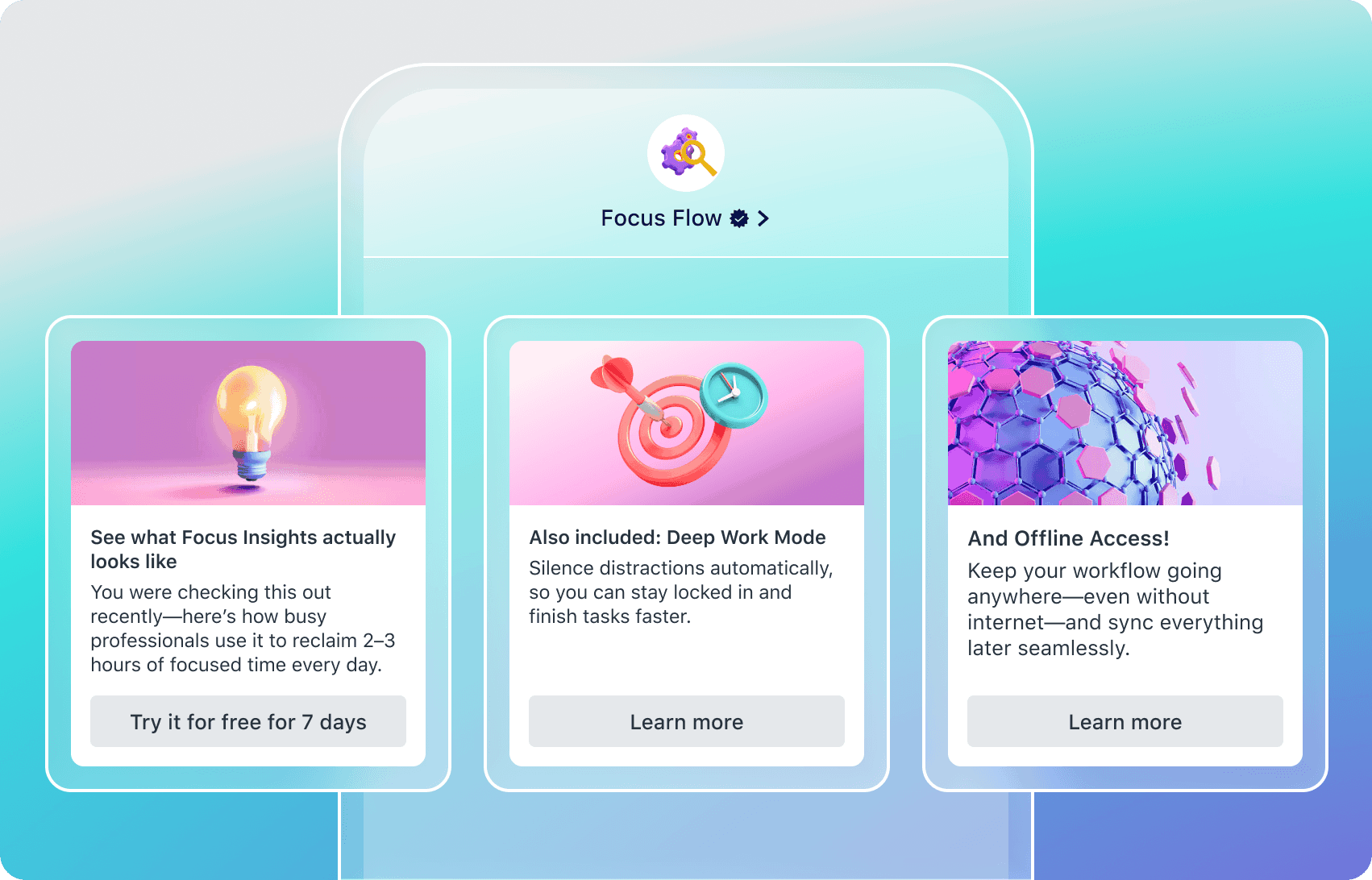
Focus on reinforcing the value they've already gotten, show them specifically what they'd gain, and make the decision feel like a natural next step.
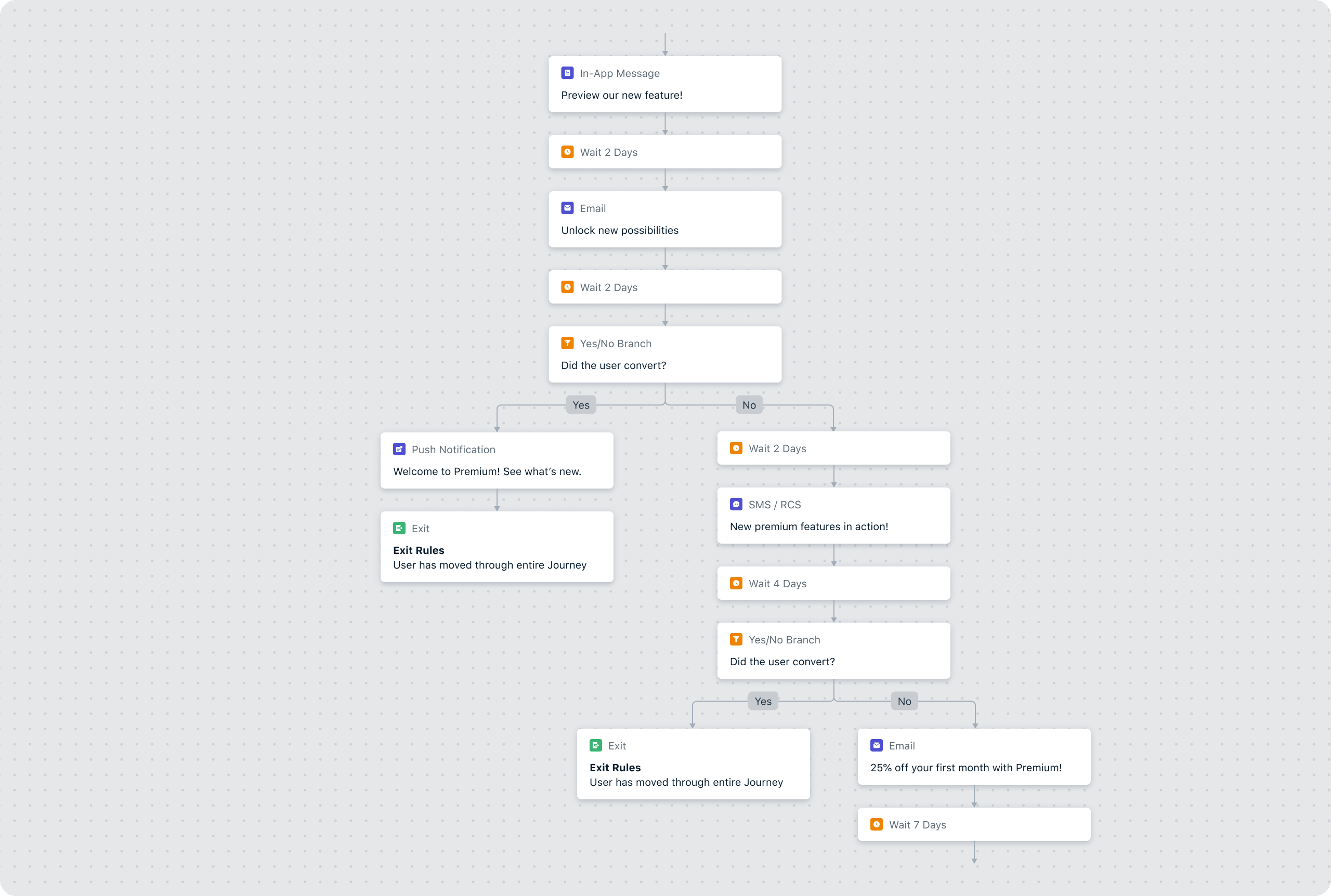
The Recipe: Value-First Conversion Journey
Vertical: eCommerce Channels Used: In-App Message, Push, Email, RCS/SMS Entry Trigger: Customer has not opened a push notification in 14 days AND has not opened the last 3 emails, but has visited the site/app at least once in the past 10 days. (Still shopping, just ignoring your messages.)
Exit Conditions:
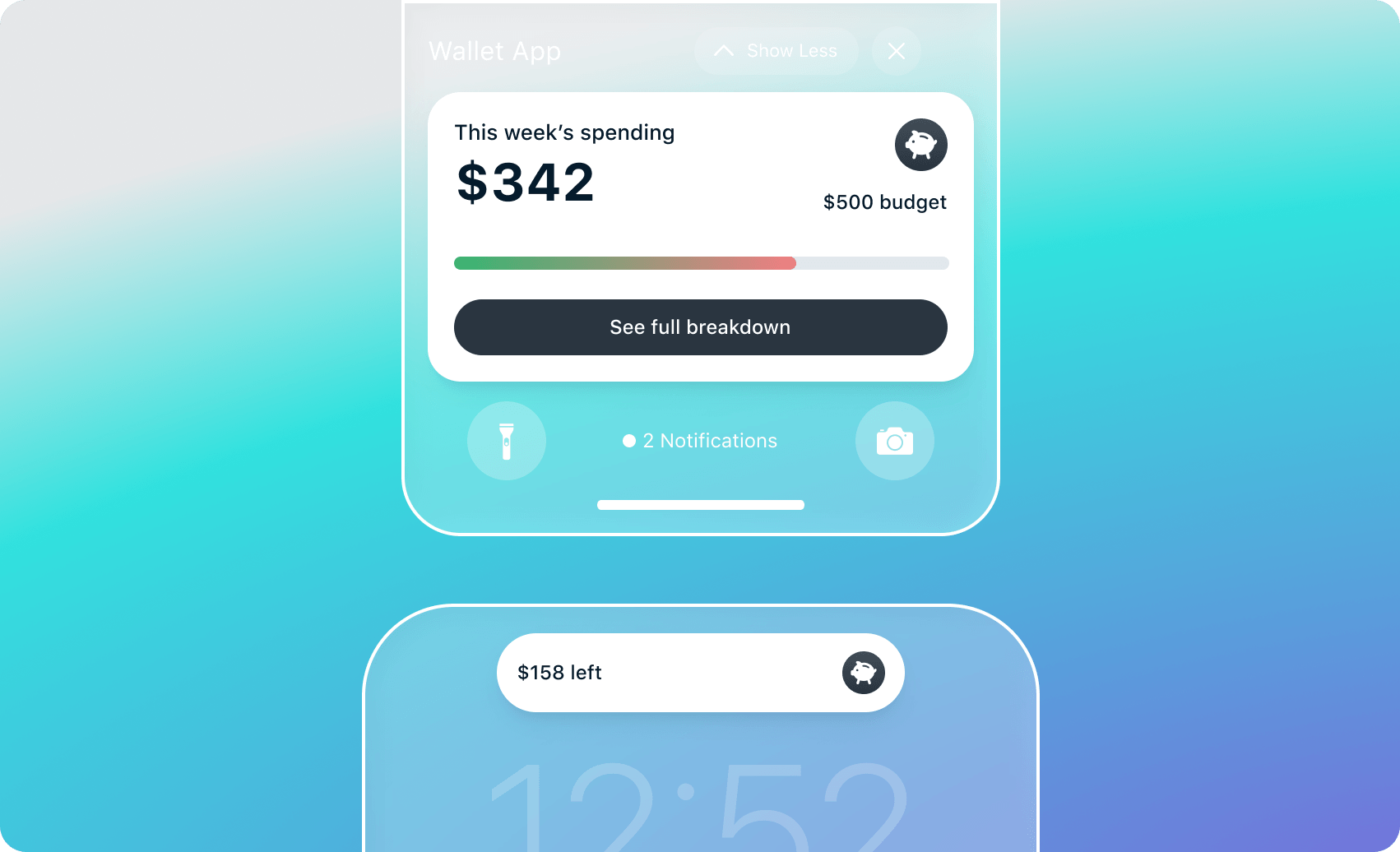
User adopts the feature → Reinforcement messages + Live Activity, exit
User completes sequence without adopting → Cooled off 60 days for this feature
Different target feature may trigger a new Journey after 30 days
Recipe #5
"Our power users are plateauing."
If this sounds familiar...
You have a core group of users who log in regularly, check their balance, maybe pay a bill or transfer funds. But it’s the same three things, every time. They're retained by the numbers, but their behavior has flatlined. They're not using budgeting tools, investment features, credit score tracking, or any of the capabilities that differentiate your app from a basic bank account.
...try this
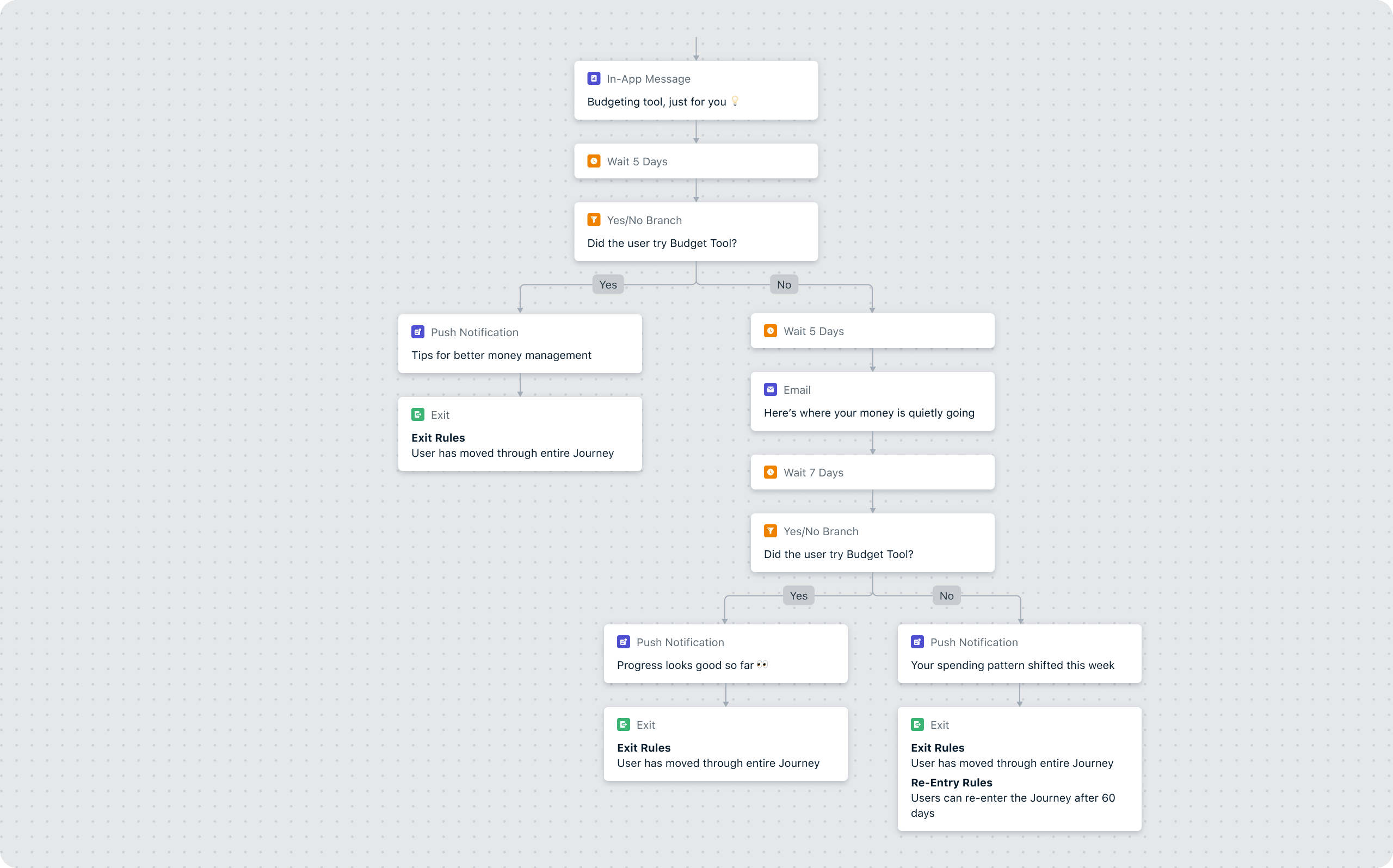
Power users plateau when your product becomes invisible infrastructure. Users treat the app like a utility: open, check balance, close. The features that drive deeper engagement (and higher LTV) go undiscovered because nothing in the user's current flow surfaces them.
The risk: a utility relationship is easy to replace. If a competitor offers a slightly better rate or a cleaner UI for the same basic functions, there's nothing anchoring the user to your platform. The fix is surfacing underused features in the context of behavior they're already doing, so the discovery feels relevant rather than random.
The Recipe: Feature Expansion Journey
Vertical: Finance/FinTech Channels Used: In-App Message, Push, Email, Live Activity Entry Trigger: User is in the "power user" segment (e.g., 10+ sessions in 30 days, uses at least one core feature weekly) AND has not used [Target Feature — e.g., Budgeting, Round-Ups, Credit Score Monitoring] in the past 30 days.
Exit Conditions:
Customer updates preferences → Exits to standard flows with new settings
Customer re-engages with any channel → Returns to regular rotation
Customer remains unresponsive → Suppressed from promotional sends (not deleted)
🛡️ Why this is AI-resilient:
Messages to power users referencing their specific financial activity are highly personalized and clearly relevant. AI systems are unlikely to filter a message about your own spending patterns or a new tool related to your actual transaction history.
Recipe #6
"Our seasonal users never become year-round users."
If this sounds familiar...
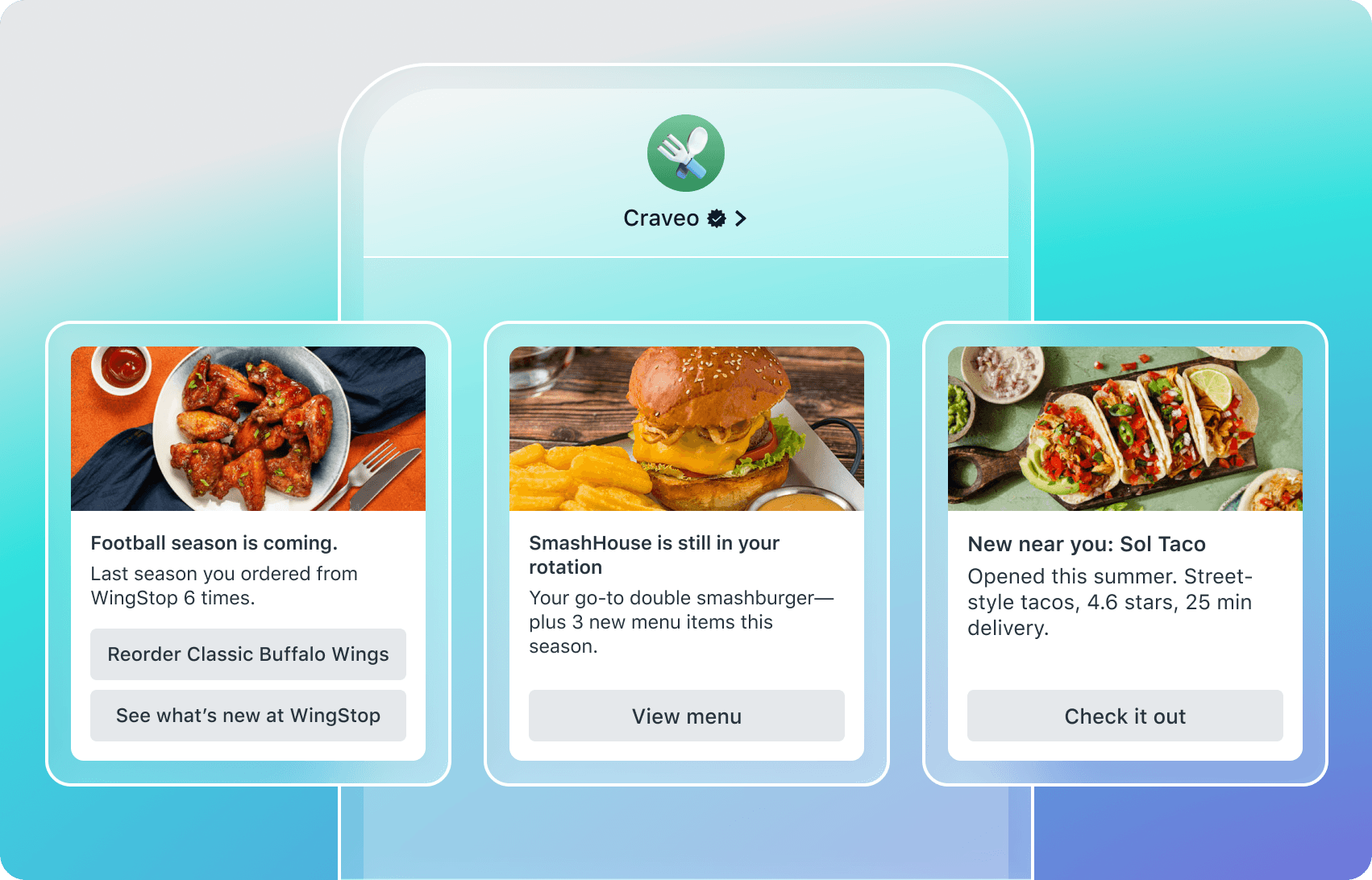
Your order volume spikes during football season, holidays, heat waves, and finals week. The users behind those spikes are real and engaged. They're placing orders, trying new restaurants, and tipping well. But once the season passes, they stop. And every year, you spend acquisition budget to bring them back when they were never technically gone.
...try this
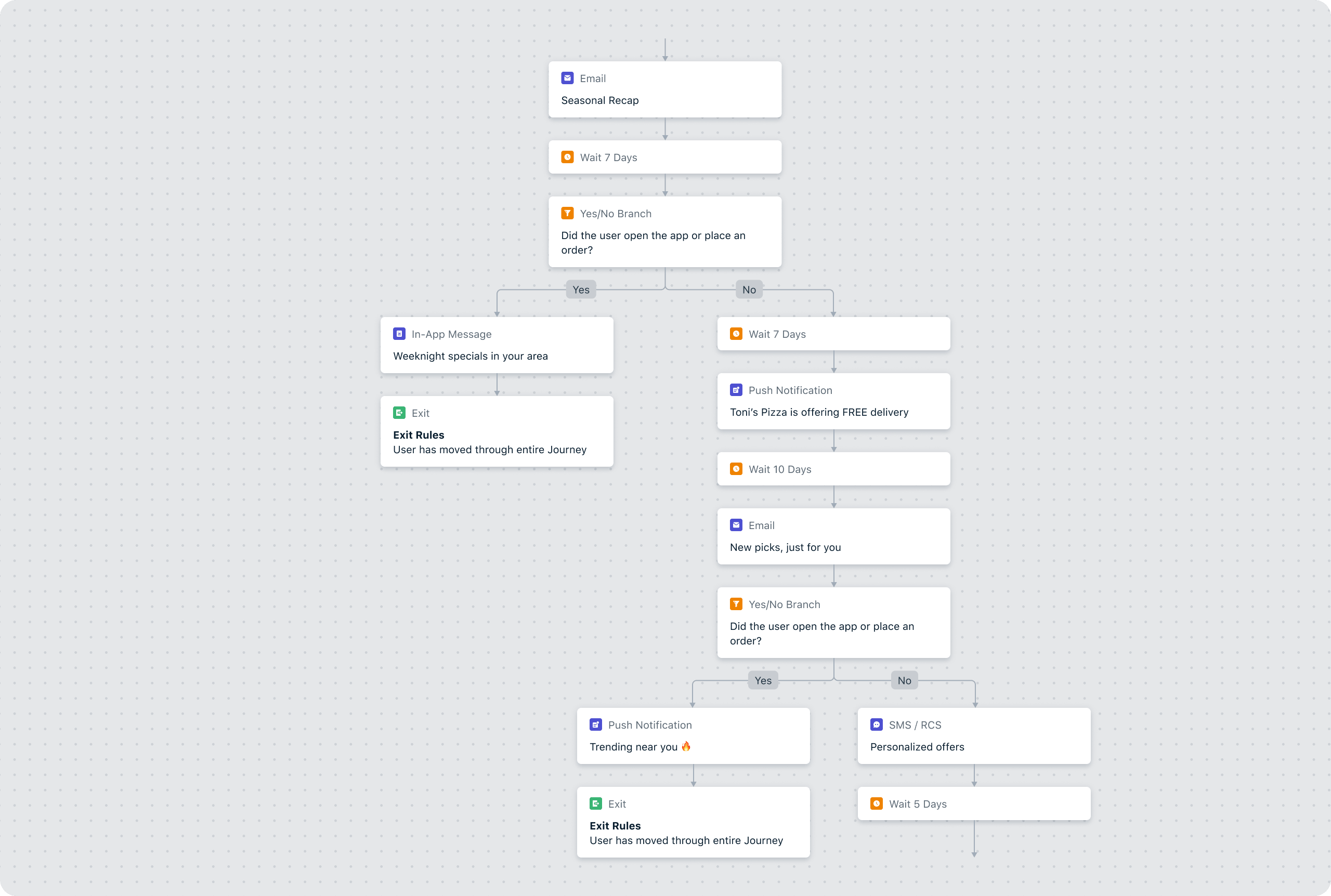
Seasonal food delivery users leave because the relationship with your app is occasional-driven, not habitual. They leave because their reason to order (convenience during a busy period, gatherings with friends, too hot to cook) went away. The relationship is occasion-driven, not habitual.
Converting them to year-round users means finding the bridge: a reason to order that isn't tied to the season. Maybe it's a lunch routine, a weeknight go-to for busy parents, or a recurring office order.
The Recipe: Off-Season Bridge Journey
Vertical: Food Delivery Channels Used: Email, Push, In-App Message, RCS Entry Trigger: Customer placed 3+ orders during the defined peak season AND has not placed an order in the 10 days following the end of the peak period.
Exit Conditions:
Customer re-engages during off-season → Exits to standard flows
Customer reaches next peak season → Exits to peak-season flows
Customer unsubscribes → Removed
Zero engagement after 60 days in off-season nurture → Suppressed to transactional only
🛡️ Why this is AI-resilient:
Messages to power users referencing their specific financial activity are highly personalized and clearly relevant. AI systems are unlikely to filter a message about your own spending patterns or a new tool related to your actual transaction history.
Start building
You don't need to overhaul your entire messaging strategy to see results from these recipes. Pick the situation that sounds most like your team's current challenge, build that Journey, and measure the impact over 30 days.
Most teams that implement even one of these flows see measurable improvements in the metrics that matter: session consistency, channel retention, time-to-conversion, and long-term LTV. The compounding starts with the first one.
If you're ready to build these Journeys in OneSignal, you can get started with a free account or talk to our team about what's possible for your app.