Industry
Consumer Social EntertainmentUse case
Onboarding Re-engagementMessaging channel
Mobile push notificationsRegion
North AmericaKey takeaways
What's on your Shelf?
Shelf, built by Koodos, is a social app that lets users track what they're watching, reading, listening to, and playing (pulling from platforms like Spotify, Netflix, and Apple Music into one place.)
It hit #6 on the App Store charts, was named YouTube's "hottest new app," and made Business Insider's top apps of recent years.
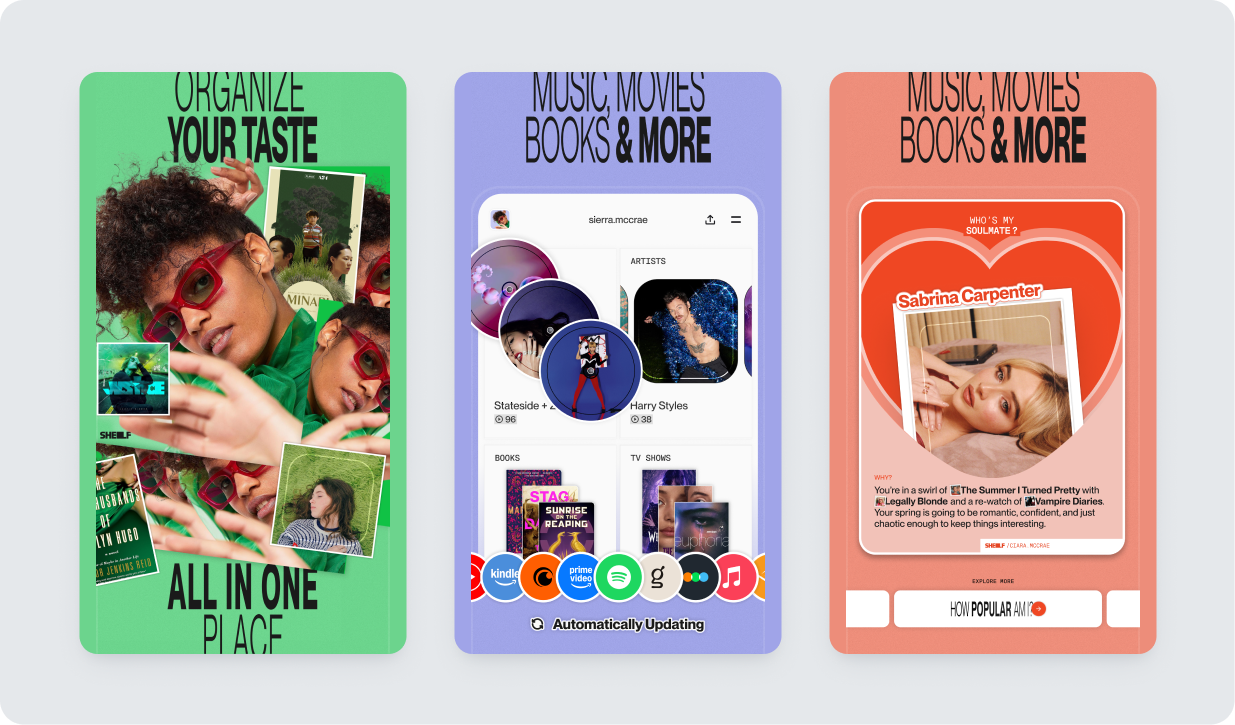
When your product is built on personal taste, the notification that brings someone back is as much a part of the experience as the app itself.
Shelf gets more valuable the moment you turn notifications on. They're the external signal that pulls you back into the experience and helps you learn about yourself through the media you love.
OneSignal has been most valuable to us as the nudge that brings someone back into the app after they've been away, and signals that something worth returning for is happening.
For a small team shipping fast, their requirements were straight-forward and practical: cross-platform push on iOS and Android, a clean developer experience, and the ability for non-engineers to build and iterate on Journeys directly in the UI without pulling the team off product work.
Earning every tap
Shelf's approach to push is deliberately restrained, and for good reason. They lean almost entirely on push as an external trigger and they're disciplined about what qualifies.
The team frames each notification around a real user problem, tests it on the segment most likely to find it relevant, watches the CTR, and expands from there.
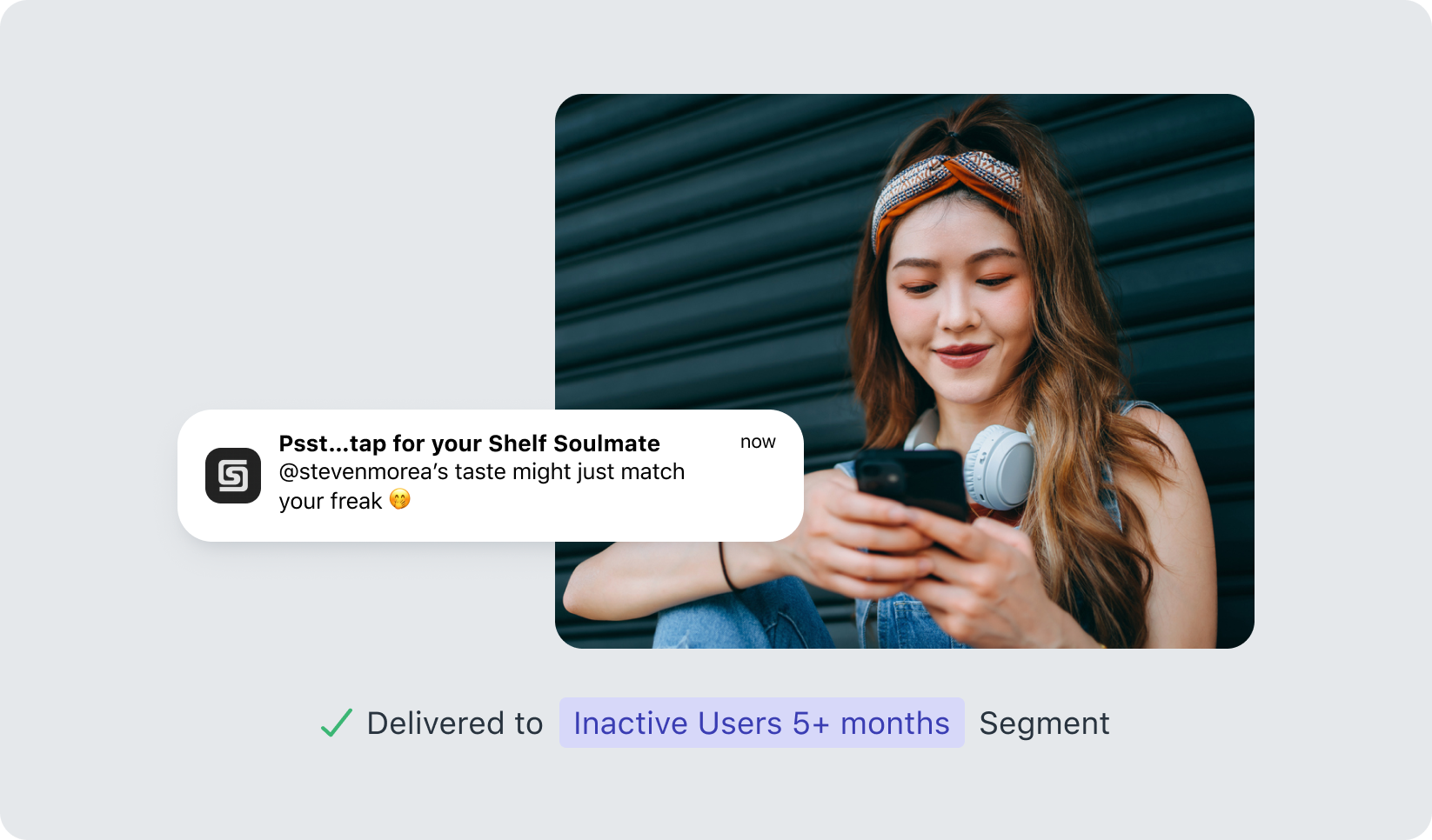
For example, when Shelf wanted to test whether users would come back to track books, they didn't send the notification to everyone. They started with the cohort that already had the most books on their shelves, measured the response, and expanded from there.
For a Gen Z audience that won't hesitate to mute you, that discipline is what keeps Shelf's notifications on.
The Monday notification people actually screenshot
The Weekly Recap is the centerpiece of Shelf's messaging strategy. Every Monday, a Journey runs across their entire user base, sending each person a personalized push notification recapping their week: the songs they had on repeat, the shows they binged, the books they tore through.
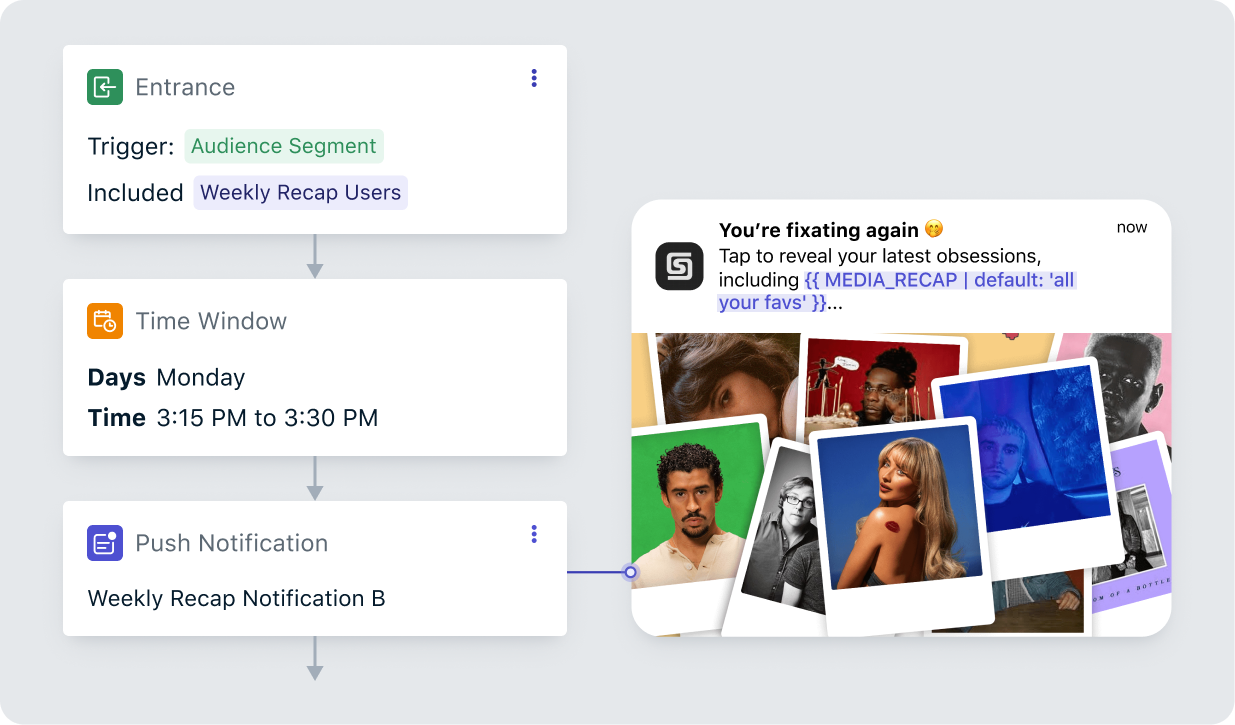
OneSignal's Liquid syntax lets us drop each user's own data into the copy, and those personalized variants are consistently our highest-converting.
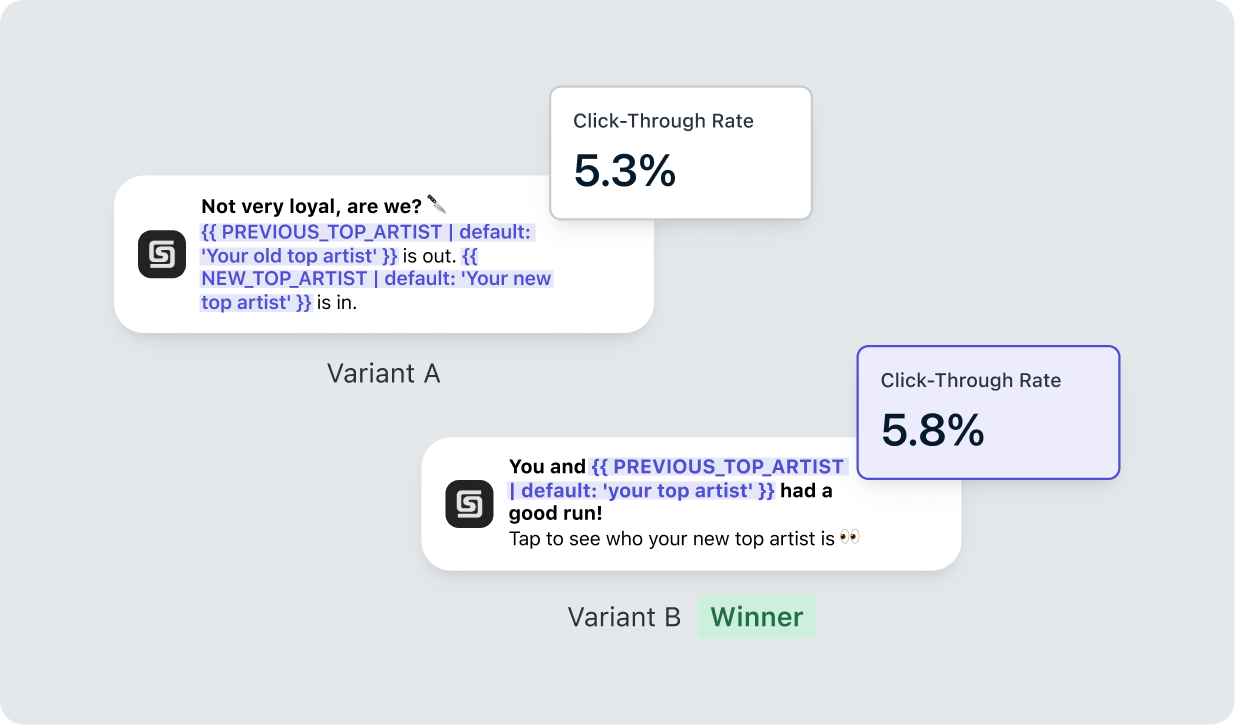
The shift from generic to personalized copy changed everything. CTR roughly doubled. Retention on users receiving personalized pushes went up close to 2x. And something the team didn't plan for: users even started screenshotting their recaps and sharing them on social media. A push notification became one of Shelf's most shareable artifacts.
Tease the user just enough to massage their curiosity, and they'll open the app… which is exactly what makes them stick.
The Journey runs A/B segments so the team can test variant A against variant B every week, and sends are staggered across the full day rather than fired all at once.
Too many users coming back at once
The Weekly Recap worked almost a little too well. When Shelf originally sent it to everyone at the same time, the flood of users returning simultaneously overwhelmed their database and caused a mini-outage every Monday, like clockwork.
The fix was reworking the Journey to schedule sends across the entire day, effectively load-balancing the traffic coming back into the app. It smoothed out the spikes and let the recap keep scaling as the user base grew.
It's a good example of how tightly messaging and infrastructure are coupled at Shelf's scale.
Connecting the data
Shelf uses the Amplitude integration with OneSignal in both directions. Behavioral cohorts built in Amplitude (or queried manually and exported as a CSV) get ported into OneSignal as segments via the connector. This turns a behavioral idea into a targetable audience without rebuilding the logic in a second system.
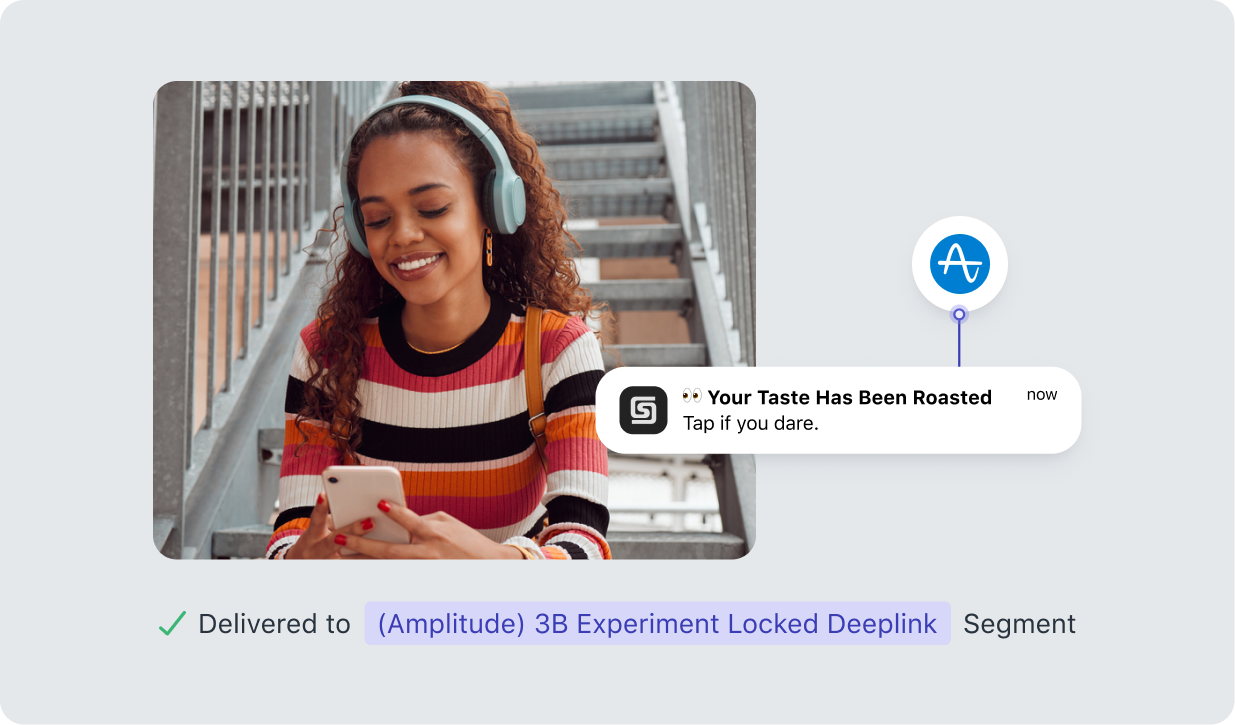
Going the other way, OneSignal events flow back into Amplitude, so the team can see how a given notification performed alongside all their other product data in one place. It keeps measurement centralized rather than stitched together after the fact.
Curating what comes next
Today, the Weekly Recap drives retention for Shelf's core experience. What's next is extending that same journey-driven approach to new experiences inside the app, each with its own notification strategy.
It's a new surface for the same idea that's already worked: a timely, personal, external nudge that's genuinely worth coming back for. As the product scales, that's the bar every message has to clear.
Start from the user's needs and their Journey, not from your own goals. A notification only works if it solves a genuine need for that person.